


Table of Contents
- Introduction
- What Is Smoke Cloak Fluid? (Featured Snippet Definition)
- How Smoke Cloak Fluid Works in Security Fog Systems
- Why Smoke Cloak Fluid Matters in the Australian Context
- Types of Smoke Cloak Fluid Used in Australia
- Is Smoke Cloak Fluid Safe? Health, Materials, and Visibility
- Compliance, Standards, and Administrative Considerations in Australia
- Choosing the Right Smoke Cloak Fluid: A Practical Checklist
- Storage, Handling, and Maintenance Best Practices
- Performance Factors: What Affects Fog Density and Hang Time
- Comparison Table: Certified vs Non-Certified Smoke Cloak Fluid
- People Also Ask: Smoke Cloak Fluid (Australia)
- Expert Q&A: In-Depth Answers on Smoke Cloak Fluid
- Conclusion and Next Steps
1) Introduction
If you’re researching smoke cloak fluid, chances are you’re responsible for protecting a premises in Australia—such as a retail store, warehouse, pharmacy, or data room—and you want clear, factual guidance before investing. From my experience working with security fog deployments across Australian sites, confusion often arises around what the fluid actually is, how safe it is, and whether all fluids perform the same. This guide answers those questions with practical, reader-first explanations, Australian context, and verifiable sources—without hype or guarantees.
2) What Is Smoke Cloak Fluid? (Featured Snippet Definition)
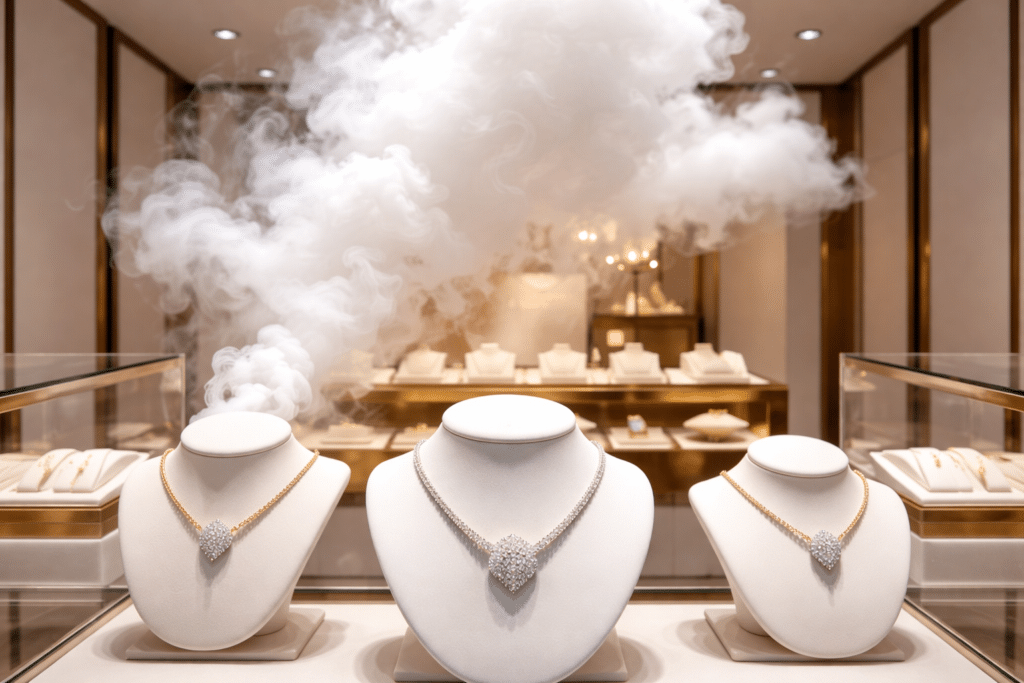
Smoke cloak fluid is a specially formulated liquid—typically water-based with pharmaceutical-grade glycols—used in security fog generators to rapidly produce a dense, white fog. When triggered, it obscures visibility within seconds, deterring intruders without combustion, residue, or permanent damage to people, electronics, or interiors.
3) How Smoke Cloak Fluid Works in Security Fog Systems
To understand why smoke cloak fluid is effective, it helps to look at the process step by step:
- Activation: A security system detects an intrusion (alarm, sensor, or panic input).
- Heating & Vaporisation: The fog generator heats the smoke cloak fluid to a controlled temperature.
- Condensation: When released into cooler air, the vapour condenses into microscopic droplets.
- Visibility Loss: These droplets scatter light, reducing visibility to near zero within seconds.
Importantly, this is not smoke from combustion. There is no burning, no flames, and no soot. The “smoke” appearance is actually a fog made of suspended droplets, similar in principle to theatrical fog but engineered for rapid density and short deployment times.
4) Why Smoke Cloak Fluid Matters in the Australian Context
Australia presents unique environmental and regulatory considerations that directly affect smoke cloak fluid performance:
- Climate variability: High temperatures in states like Queensland or Western Australia can affect fog hang time and dispersal.
- Mixed-use buildings: Many Australian retail sites share walls with offices or apartments, making clean, residue-free fog essential.
- Workplace safety expectations: Businesses are expected to consider staff, emergency responders, and bystanders.
From practical deployments, correctly specified smoke cloak fluid helps ensure fast obscuration without triggering secondary issues such as slippery residue, lingering odours, or sensor contamination.
5) Types of Smoke Cloak Fluid Used in Australia
Not all smoke cloak fluid is the same. In Australia, you’ll typically encounter the following categories:
Water-Based Glycol Fluids
- Most common in certified security fog systems
- Designed for rapid dispersion and clean evaporation
- Compatible with electronics when used as specified
Manufacturer-Specific Fluids
- Formulated for a particular fog generator brand
- Tested for nozzle design, heating element, and output rate
- Often required to maintain warranties and performance guarantees
Generic or Non-Certified Fluids
- May be cheaper upfront
- Performance and safety data can be limited
- Higher risk of residue or inconsistent fog density
According to guidance published by fog system manufacturers and safety bodies, using the correct, approved fluid is critical to predictable results and ongoing reliability https://www.smokecloak.com.
6) Is Smoke Cloak Fluid Safe? Health, Materials, and Visibility
Human Safety
Reputable smoke cloak fluid is formulated to be:
- Non-toxic when used as directed
- Non-flammable
- Non-irritant for short-term exposure
Studies on glycol-based fogs used in security and entertainment settings show no long-term health effects when exposure is brief and controlled, which aligns with Australian workplace safety expectations https://www.safeworkaustralia.gov.au.
Materials & Electronics
From real-world use in Australian retail and server rooms:
- No oily residue when certified fluids are used
- No corrosion on metals or circuit boards
- Minimal cleanup after activation
The key variable is fluid quality and correct system calibration.
7) Compliance, Standards, and Administrative Considerations in Australia
While this article does not provide legal advice, Australian businesses typically treat smoke cloak fluid selection as an administrative and safety review task:
- Confirm the fluid aligns with manufacturer documentation
- Keep Safety Data Sheets (SDS) on file
- Ensure staff induction includes basic awareness of fog systems
Some systems align with European standards (such as EN-based testing), which are commonly accepted benchmarks in Australia for product safety and performance https://www.iso.org.
8) Choosing the Right Smoke Cloak Fluid: A Practical Checklist
Use this checklist when sourcing or reviewing smoke cloak fluid:
- Confirm it is approved by your fog generator manufacturer
- Request a current Safety Data Sheet (SDS)
- Verify it is non-flammable and residue-free
- Check suitability for Australian temperature ranges
- Avoid mixing fluids from different brands
- Document batch numbers for maintenance records
This approach reduces operational risk and supports consistent fog performance.
9) Storage, Handling, and Maintenance Best Practices
From hands-on experience, poor storage causes more issues than deployment itself.
Best practices include:
- Store fluid in a cool, shaded area
- Keep containers sealed to avoid contamination
- Rotate stock to avoid expired fluid
- Wipe nozzles during routine system checks
Proper handling directly affects fog density and reliability during real incidents.
10) Performance Factors: What Affects Fog Density and Hang Time
Several factors influence how smoke cloak fluid performs once deployed:
- Room volume: Larger spaces need higher output or longer discharge
- Airflow: HVAC systems can disperse fog faster
- Temperature: Hot air reduces hang time
- Fluid formulation: Certified fluids are engineered for consistency
Understanding these variables helps Australian businesses set realistic expectations rather than relying on marketing claims.
11) Comparison Table: Certified vs Non-Certified Smoke Cloak Fluid
| Feature | Certified Smoke Cloak Fluid | Non-Certified Fluid |
|---|---|---|
| Manufacturer tested | Yes | Often no |
| Residue risk | Very low | Variable |
| Safety documentation | SDS provided | Sometimes missing |
| Warranty compatibility | Yes | Often voids warranty |
| Consistency | Predictable | Inconsistent |
12) People Also Ask: Smoke Cloak Fluid (Australia)
Is smoke cloak fluid legal to use in Australia?
Yes. When used as intended in security systems, smoke cloak fluid is permitted, provided standard workplace safety and product documentation is maintained.
Does smoke cloak fluid damage stock or electronics?
Certified fluids are designed to evaporate cleanly and are widely used in electronics-heavy environments without damage.
How long does smoke cloak fog last?
Typically between 20 and 60 minutes, depending on airflow, temperature, and room size.
Is smoke cloak fluid the same as theatrical fog?
No. While similar in concept, smoke cloak fluid is engineered for faster density and security-specific performance.
13) Expert Q&A: In-Depth Answers on Smoke Cloak Fluid
Q1: Can different smoke cloak fluids be mixed in one machine?
Mixing fluids is not recommended, as formulations vary and can affect heating elements and fog output.
Q2: How often should smoke cloak fluid be replaced?
Most manufacturers recommend replacement every 12–24 months or according to usage and storage conditions.
Q3: Will smoke cloak fluid set off fire alarms?
It can trigger optical smoke detectors. Many Australian installations coordinate detector zoning as part of system design.
Q4: Is smoke cloak fluid environmentally harmful?
Reputable fluids are water-based and used in small quantities, with minimal environmental impact when deployed indoors.
Q5: Does humidity affect smoke cloak fluid performance?
Yes. High humidity can slightly reduce fog density but rarely compromises overall visibility reduction.
14) Conclusion and Next Steps
Choosing the right smoke cloak fluid is not about marketing promises—it’s about verified safety, predictable performance, and suitability for Australian conditions. By understanding how the fluid works, what affects its performance, and how to select certified options, you reduce risk while improving real-world security outcomes.
If you’re planning or reviewing a security fog deployment, consider speaking with a specialist who understands Australian sites and conditions. For practical guidance and system-matched solutions, explore professional support through Australian security fog system expertise and smoke cloak solutions and ensure your setup is built on quality, not guesswork.