


The Complete Guide to Smoke Cloak Systems in Australia: Instant Protection for High-Risk Assets
Table of Contents
- Introduction
- What is a Smoke Cloak? (Featured Definition)
- The Australian Security Landscape: Why Passive Alarms Fail
- How Smoke Cloak Technology Works
- Comparison: Smoke Cloak vs. Conventional Security
- Applications: Who Needs Smoke Protection in Australia?
- Installation Checklist: Securing Your Premises
- Safety, Residue, and Compliance Standards
- People Also Ask (PAA)
- Advanced Q&A: Expert Insights
- Conclusion
1. Introduction
In the evolving world of asset protection, Australian business owners are increasingly searching for the term Smoke Cloak to find solutions that do more than just record a crime. As a security professional operating in the Australian market, I have seen firsthand the devastation caused by “smash and grab” tactics. Traditional alarms scream for help, and CCTV cameras watch the event unfold, but neither physically prevents a determined thief from grabbing stock and fleeing.
The reality of modern burglary in cities like Melbourne, Sydney, and Brisbane is that speed is the criminal’s greatest weapon. Most break-ins are over in under four minutes—long before police or security patrols can navigate traffic to reach the site. This is where Smoke Cloak technology (often referred to generically as security smoke or fog) changes the dynamic entirely. By filling a space with an impenetrable cloud the moment a break-in is detected, these systems remove the most vital tool a burglar has: their vision.
In this comprehensive guide, we will explore exactly how these systems function, the specific benefits for Australian businesses, and the critical installation steps required to ensure your property remains secure.
2. What is a Smoke Cloak?
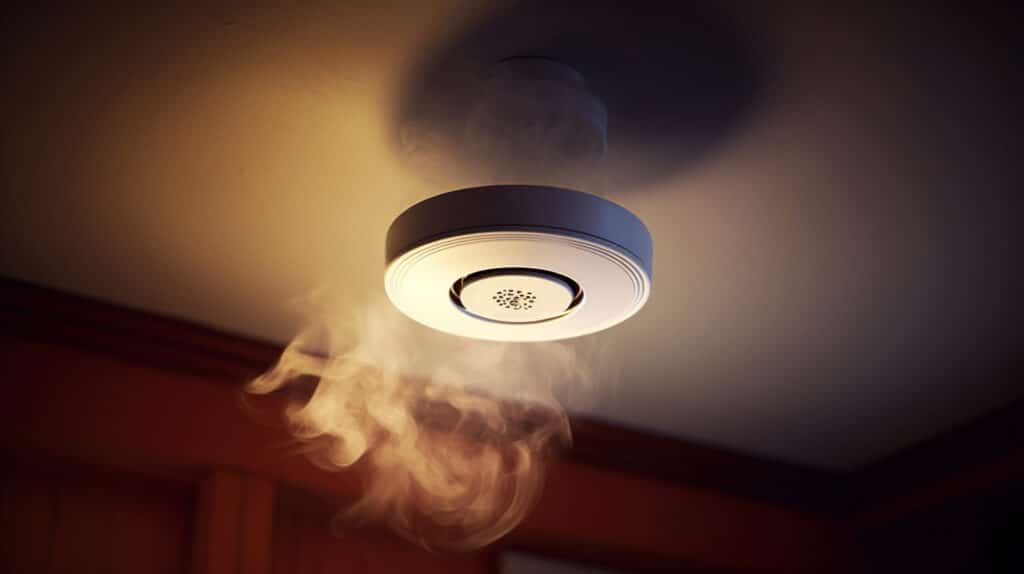
A Smoke Cloak system is an active security device that generates a dense, harmless vapor (often called security fog) immediately upon detecting an intrusion. Within seconds, it fills a room to reduce visibility to less than arm’s length, disorienting intruders and forcing them to retreat empty-handed before authorities arrive.
3. The Australian Security Landscape: Why Passive Alarms Fail
To understand why Smoke Cloak systems are becoming a necessity, we must look at the current crime trends in Australia.
The Rise of Aggressive Theft
Recent data indicates a surge in aggravated burglaries and ram-raids targeting specific high-value sectors. Tobacconists, jewelry stores, and independent retailers have faced a wave of attacks where offenders use vehicles to breach shopfronts. In these scenarios, the physical barriers (doors, roller shutters) are bypassed in seconds.
The “Response Gap”
There is a critical disconnect between alarm activation and physical response.
- The Incident: A thief breaks a window. The alarm triggers instantly.
- The Monitoring: The monitoring center calls the keyholder or dispatches a patrol car.
- The Transit: In Australian suburbs, a patrol car might take 15 to 30 minutes to arrive.
- The Reality: The thief needs only 3 minutes to empty a display cabinet.
This “gap” is where the loss occurs. A Smoke Cloak is designed specifically to close this gap. It does not wait for a human to arrive; it acts immediately, effectively “manning” the site 24/7.
4. How Smoke Cloak Technology Works
While the name implies “smoke,” the substance generated is scientifically closer to a fog or vapor. Understanding the mechanics helps alleviate concerns about fire risks or damage to goods.
The Chemistry of the Cloak
The “smoke” is generated by forcing a specialized fluid through a heater block. The fluid is typically a mix of food-grade glycol and distilled water.
- Glycol: This helps the vapor hang in the air and remain dense.
- Water: Provides the volume and ensures the vapor is safe to breathe.
When this mixture hits the heating element, it transforms from liquid to gas, expanding roughly 600 times its volume. It is ejected into the room as a dry, white cloud.
The Trigger Sequence
From my experience installing these systems, the configuration of the trigger is vital to prevent false alarms.
- Armed State: The system is only active when the burglar alarm is armed (e.g., after hours).
- Verification (Double Knock): To trigger the smoke, the system usually requires two separate confirmations—for example, a door contact opening and a PIR motion sensor tripping. This ensures a faulty sensor doesn’t fill your shop with smoke on a Tuesday afternoon.
- Deployment: Once triggered, the unit fires. A standard retail space can be reduced to zero visibility in under 15 seconds.
5. Comparison: Smoke Cloak vs. Conventional Security
When budgeting for security, business owners often ask if a Smoke Cloak is worth the investment compared to upgrading cameras or shutters.
| Feature | Standard Alarm/CCTV | Smoke Cloak System |
| Primary Goal | Evidence & Notification | Loss Prevention |
| Intruder Reaction | Ignore or cover face | Panic & Retreat |
| Physical Barrier? | No | Yes (Visual) |
| Protection Speed | Reactive (wait for police) | Instant (seconds) |
| Theft Outcome | Goods usually stolen | Goods usually saved |
| Deterrence | Medium (commonplace) | High (fear of entrapment) |
The table highlights the fundamental difference: standard alarms are passive, while a Smoke Cloak is active.
6. Applications: Who Needs Smoke Protection in Australia?
While any business can benefit, certain Australian industries are adopting this technology rapidly due to insurance requirements and risk profiles.
1. High-Value Retail
Jewelers, watch dealers, and designer handbag stores are prime targets. A Smoke Cloak protects the inventory in the precious minutes before police arrive. Even if the thief smashes the glass, they cannot find the goods to steal them.
2. Tobacconists and Liquor Stores
With the rising black market value of tobacco in Australia, these businesses face frequent break-ins. Smoke protection creates a confusing environment that makes grabbing small, high-value items impossible.
3. Warehouses and Logistics
Storage facilities holding copper wire, power tools, or electronics often have large floor plans. Industrial-grade smoke units can fill these vast voids rapidly, protecting millions of dollars in stock.
4. Residential Garages
We are seeing an increase in homeowners using smaller units to protect luxury vehicles or classic cars stored in garages, preventing key-theft or vehicle stripping.
7. Installation Checklist: Securing Your Premises
Installing a Smoke Cloak is not a plug-and-play task. It requires integration with your existing security infrastructure. Here is a checklist we use when onboarding a new Australian client.
1. Volume Calculation
The most critical step is measuring the room’s cubic volume (Length x Width x Height).
- Why? If the unit is underpowered, the smoke will be too thin to hide the goods. If overpowered, it is wasteful.
2. Ventilation Analysis
- Are there large gaps under doors?
- Is the air conditioning set to run 24/7?
- Action: The installer may need to relay the air conditioning to cut power when the smoke triggers, ensuring the fog isn’t sucked out immediately.
3. Sensor Placement
- Sensors must be positioned to catch the intruder before they reach the target area, giving the machine those vital few seconds to fire.
4. Mounting & Power
- Units should be mounted high or concealed above ceilings to prevent tampering.
- They require a permanent power connection but must also have a robust battery backup to function during a power cut (a common tactic by sophisticated thieves).
5. Warning Signage
- You must display warning stickers (e.g., “Premises Protected by Security Smoke”) at entry points. This is both a deterrent and a safety requirement.
For a professional assessment of your site’s suitability, you can review our security fog protection solutions.
8. Safety, Residue, and Compliance Standards
A common misconception about the Smoke Cloak is that it leaves a mess. In reality, modern systems are designed to be clean.
Residue Concerns
Because the vapor is “dry,” it does not create a wet film on surfaces.
- Electronics: Safe for computers, servers, and POS systems.
- Clothing: Generally safe for textiles, though direct, point-blank exposure should be avoided.
- Food: While the fluid is non-toxic (glycol is used in food processing), health regulations usually suggest covering open food displays.
Australian Standards
In Australia, reputable installers follow guidelines aligned with European Standard EN 50131-8. This standard dictates how security fog systems should be designed, installed, and maintained to ensure they are safe for human exposure and effective against crime.
According to the Australian Security Industry Association Limited (ASIAL), using compliant equipment is essential for insurance validity. Using non-certified, cheap imports can lead to liability issues if the unit malfunctions or causes damage.
9. People Also Ask (PAA)
How much does a Smoke Cloak cost in Australia?
The price varies significantly based on the room size. A small unit for a back office might cost between $2,000 and $3,000, while large warehouse systems can exceed $5,000 plus installation. It is best to view this as a capital investment that may lower your insurance premiums.
Is the smoke harmful to breathe?
No, the vapor produced by a certified Smoke Cloak is non-toxic. It is a glycol-water mix similar to that used in theatrical productions. However, the density is high, so while it is safe, it is not comfortable to remain in, which encourages the intruder to leave.
Will it trigger the fire brigade?
It can if not managed correctly. Standard optical smoke detectors cannot tell the difference between security smoke and fire smoke. Professional installers will either isolate the zone on the fire panel or replace optical sensors with heat sensors to prevent false call-outs and potential fines.
Can a thief just wait for the smoke to clear?
Modern systems have a “pulse” mode. After the initial burst, the system monitors the density. If the smoke begins to settle, it fires short bursts to maintain zero visibility for up to 45 minutes or more, ensuring the intruder cannot re-enter.
10. Advanced Q&A: Expert Insights
Q1: What happens if the power is cut to the building?
A: High-quality Smoke Cloak units contain backup batteries. They act as an Uninterruptible Power Supply (UPS), keeping the heater block hot and the electronics active for a period (typically 1–3 hours) after mains power is lost. This ensures protection even during sabotage attempts.
Q2: Does the fluid expire or need refilling?
A: The fluid is only consumed when the unit fires. If you have no break-ins, a fluid bag can last for years. However, fluid containers usually have an expiry date (often 2-5 years) to ensure chemical stability. We recommend checking this during your annual security audit.
Q3: Is it legal to trap a burglar?
A: This is a complex legal area in Australia. Smoke Cloak systems are designed to deter and repel, not to trap. The goal is to force the intruder out the way they came. Locking doors automatically while filling a room with smoke could present liability issues regarding “deprivation of liberty” or safety risks. The system relies on the intruder’s natural instinct to flee.
Q4: Can I install this myself?
A: It is strongly advised against. Aside from the high-voltage wiring, the integration with alarm panels and fire systems requires a licensed security technician. Incorrect installation can lead to false activations (which are terrifying for staff) or failure to fire during a crime.
Q5: How does this impact my insurance policy?
A: Many Australian insurers look favorably on active deterrents. By reducing the risk of a “total loss” claim, you may be able to negotiate a lower premium or a reduced excess. Always inform your insurer that you have installed a Smoke Cloak system compliant with Australian standards.
11. Conclusion
The security environment in Australia has shifted. Thieves are faster, more brazen, and less deterred by sirens than ever before. For business owners, the Smoke Cloak offers a robust, scientifically proven countermeasure. It converts a passive security system into an active defense, ensuring that even if a thief manages to get inside, they cannot see what they came to steal.
From reducing insurance claims to providing peace of mind overnight, the investment in security smoke is an investment in business continuity. Don’t wait for the aftermath of a break-in to upgrade your defenses.
For a detailed consultation on how to integrate this technology into your specific business environment, visit our dedicated page on security fog protection solutions.
References: