


Table of Contents
- Introduction
- What Are Security Cameras and Surveillance Systems?
- Why Security Cameras and Surveillance Systems Matter in Australia
- Types of Security Cameras Used in Australia
- Key Components of Modern Surveillance Systems
- How to Choose the Right Security Cameras and Surveillance Systems
- Installation Process: Step-by-Step Checklist
- Comparison Table: Wired vs Wireless Surveillance Systems
- Privacy and Compliance Considerations in Australia
- Costs of Security Cameras and Surveillance Systems in Australia
- Maintenance and Best Practices
- People Also Ask (PAA)
- Expert Q&A Section
- Conclusion
Introduction
Across Australia, more homeowners and businesses are investing in security cameras and surveillance systems to protect property, staff, and assets. From small retail shops in Sydney to suburban homes in Melbourne and warehouses in Perth, surveillance technology has become a core part of modern security strategies.
From my experience working with businesses that rely on surveillance infrastructure, the biggest shift in recent years has been the move from simple CCTV cameras to intelligent, network-based monitoring systems. These systems not only record video but can detect movement, send alerts to smartphones, and store footage securely in the cloud.
Importantly, Australian organisations are also paying closer attention to privacy regulations and responsible surveillance practices. This means installing cameras carefully, informing staff or visitors when monitoring is active, and storing footage securely.
In this comprehensive guide, we’ll explain how security cameras and surveillance systems work, what Australians should consider before installing them, and how to choose the best setup for homes or businesses.
What Are Security Cameras and Surveillance Systems?
Security cameras and surveillance systems are monitoring technologies that capture and record video of a location to improve safety, deter crime, and support incident investigations. They typically include cameras, recording devices, storage systems, and monitoring software that allow property owners to view live or recorded footage locally or remotely.
Why Security Cameras and Surveillance Systems Matter in Australia
Crime prevention is a major reason Australians invest in surveillance systems. According to the Australian Bureau of Statistics, thousands of property offences such as burglary and theft are reported each year across the country.
Studies consistently show that visible surveillance can deter criminal activity. For example, research highlighted by the Australian Institute of Criminology suggests that CCTV presence may reduce certain types of crime, particularly in public areas and retail environments.
Australian Bureau of Statistics crime data
Beyond crime prevention, security cameras offer several benefits:
1. Crime deterrence
Visible cameras can discourage theft, vandalism, and trespassing.
2. Evidence collection
High-resolution recordings can help police investigations when incidents occur.
3. Remote monitoring
Modern systems allow users to monitor their property through mobile apps.
4. Workplace safety
Businesses can review incidents and ensure safety procedures are followed.
5. Insurance benefits
Some insurers consider surveillance systems when assessing risk.
Types of Security Cameras Used in Australia
Not all cameras are the same. Different environments require different surveillance technology.
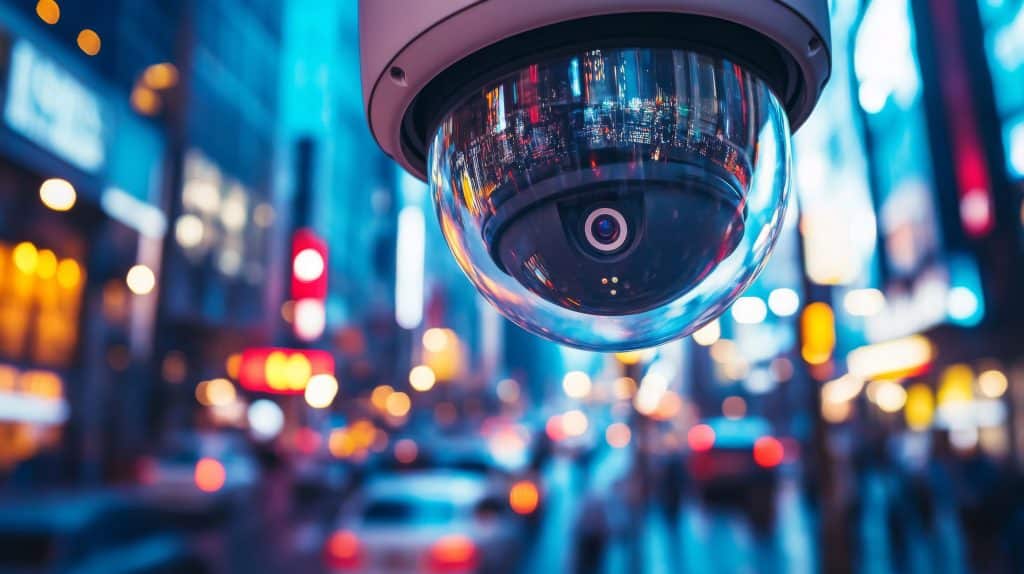
1. Dome Cameras
Dome cameras are common in retail stores, offices, and indoor environments.
Key benefits:
- Discreet design
- Wide field of view
- Harder to tamper with
They are often installed on ceilings and provide 360-degree coverage when paired with the right lens.
2. Bullet Cameras
Bullet cameras are long and cylindrical, typically used outdoors.
Advantages:
- Strong visibility deters criminals
- Longer viewing distances
- Weather-resistant design
These cameras are commonly used in car parks, driveways, and warehouses.
3. PTZ Cameras (Pan-Tilt-Zoom)
PTZ cameras allow operators to move the camera remotely.
Features include:
- Remote control movement
- Zoom capability
- Large area monitoring
They are often used in large commercial facilities or public spaces.
4. Wireless Cameras
Wireless cameras transmit video through Wi-Fi rather than cables.
Benefits include:
- Faster installation
- Remote access via apps
- Flexible placement
However, reliable internet connectivity is essential.
5. Smart AI Cameras
The newest surveillance systems incorporate artificial intelligence features such as:
- Motion detection
- Facial recognition (in limited contexts)
- Vehicle detection
- Automatic alerts
These systems reduce false alarms and improve monitoring efficiency.
Key Components of Modern Surveillance Systems
Security cameras alone do not make a complete surveillance solution. A proper system includes several integrated components.
Cameras
The most visible element of a surveillance system, capturing video footage.
Recording devices
Most systems use:
- NVR (Network Video Recorder) for IP cameras
- DVR (Digital Video Recorder) for analogue CCTV
Storage
Footage can be stored:
- On local hard drives
- On network storage devices
- In cloud storage platforms
Monitoring software
Software allows users to:
- View live footage
- Review recorded footage
- Receive alerts
Network infrastructure
Internet connectivity enables remote access and cloud storage.
For businesses considering a professional solution, it helps to consult specialists that design surveillance infrastructure. Many organisations work with providers such as professional commercial security camera solutions in Australia to design systems suited to their building layout and operational requirements.
How to Choose the Right Security Cameras and Surveillance Systems
Choosing the right system depends on several practical factors.
1. Property size
Large facilities require multiple cameras and possibly PTZ units.
2. Lighting conditions
Low-light or night environments require infrared or night-vision cameras.
3. Monitoring needs
Ask whether you need:
- Live monitoring
- Motion alerts
- Cloud storage
4. Video resolution
Common options include:
- 1080p
- 2K
- 4K
Higher resolution provides clearer identification but requires more storage.
5. Integration with alarms
Many systems integrate with alarms or access control systems.
Installation Process: Step-by-Step Checklist
Installing surveillance systems requires careful planning.
Step-by-step checklist
- Conduct a property risk assessment
- Identify key monitoring areas (entrances, driveways, loading zones)
- Choose camera types suitable for each area
- Plan cable routes or wireless connectivity
- Install cameras at appropriate height and angle
- Configure recording and storage settings
- Test remote monitoring access
- Place signage informing visitors of surveillance
- Document system setup for maintenance
This process ensures coverage while respecting privacy considerations.
Comparison Table: Wired vs Wireless Surveillance Systems
| Feature | Wired Systems | Wireless Systems |
|---|---|---|
| Reliability | Very stable | Depends on Wi-Fi |
| Installation | Requires cabling | Easier setup |
| Scalability | Best for large sites | Suitable for small properties |
| Maintenance | Lower interference | May require network troubleshooting |
| Cost | Higher installation | Lower initial setup |
Most commercial buildings in Australia still use wired systems for reliability, while homeowners often prefer wireless options.
Privacy and Compliance Considerations in Australia
Surveillance must be implemented responsibly.
Australia has several privacy frameworks that influence surveillance practices, including the Privacy Act 1988.
Office of the Australian Information Commissioner privacy guidance
Key considerations include:
Informing people about surveillance
Businesses should notify staff or visitors when cameras are in use.
Avoiding private areas
Cameras should not monitor areas where privacy is expected, such as bathrooms or change rooms.
Data protection
Recorded footage should be stored securely and accessed only by authorised personnel.
Retention policies
Many organisations keep recordings for a limited time, often between 14 and 90 days depending on operational needs.
These points are administrative considerations and not legal advice. Organisations should review policies with qualified professionals when necessary.
Costs of Security Cameras and Surveillance Systems in Australia
Costs vary widely depending on equipment quality and installation complexity.
Typical cost estimates (indicative only)
| Setup | Estimated Cost |
|---|---|
| Basic home camera kit | $200 – $800 |
| Small business system | $1,500 – $5,000 |
| Large commercial installation | $10,000+ |
Factors affecting price include:
- Number of cameras
- Recording equipment
- Installation complexity
- Storage capacity
- AI features
Businesses often treat surveillance systems as long-term infrastructure rather than one-time purchases.
Maintenance and Best Practices
Security systems require ongoing care to remain effective.
Regular maintenance tips
- Check camera lenses for dust or obstruction
- Update firmware and software regularly
- Test motion detection alerts
- Verify recording storage capacity
- Inspect cabling and mounts
According to guidance discussed by the Australian Institute of Criminology, properly maintained CCTV systems are more effective in supporting investigations and public safety initiatives.
Australian Institute of Criminology CCTV research
People Also Ask (PAA)
Are security cameras legal in Australia?
Yes, security cameras are generally legal in Australia for protecting property and safety. However, privacy laws apply. Cameras should not monitor private areas or record conversations without consent in many jurisdictions.
Do security cameras reduce crime?
Visible cameras can deter certain crimes, particularly theft and vandalism. Research cited by crime prevention agencies suggests surveillance is most effective when combined with lighting, alarms, and security procedures.
How long can CCTV footage be stored in Australia?
There is no universal timeframe, but many businesses keep footage between 14 and 90 days depending on operational needs and storage capacity.
Can security cameras work without internet?
Yes. Many CCTV systems record locally through DVR or NVR devices without internet access. However, internet connectivity enables remote viewing and cloud storage.
Are wireless security cameras reliable?
Wireless cameras can be reliable for homes and small businesses, but their performance depends on Wi-Fi quality and network stability.
FAQs: Expert Q&A About Security Cameras and Surveillance Systems
What resolution is best for identifying people or vehicles?
Most experts recommend at least 1080p resolution, though many commercial systems now use 4K cameras for improved clarity and digital zoom capability.
How many cameras does a typical home need?
Most homes require 3–6 cameras to cover entrances, driveways, and backyards. Larger properties may require additional units for full coverage.
Should cameras be visible or hidden?
Visible cameras are usually better for deterrence. However, discreet cameras may help monitor sensitive areas where theft or misconduct could occur.
Can surveillance systems integrate with smart home devices?
Yes. Many modern systems integrate with smart home platforms, allowing users to control cameras, alarms, and lighting through a single application.
How often should surveillance systems be upgraded?
Technology evolves quickly. Many businesses review their surveillance systems every 3–5 years to ensure cameras and storage remain effective.
Conclusion
Security cameras and surveillance systems have become a vital part of modern safety strategies across Australia. Whether protecting homes, retail stores, warehouses, or office buildings, the right surveillance setup can deter crime, improve operational visibility, and provide valuable evidence when incidents occur.
However, installing surveillance technology requires careful planning. Property owners should consider camera types, system reliability, privacy responsibilities, and long-term maintenance.
If you’re considering upgrading or installing a surveillance system, working with experienced professionals can help ensure the system fits your environment and complies with Australian best practices.
To explore tailored monitoring solutions, learn more about professional security camera systems designed for Australian homes and businesses and discover how modern surveillance technology can strengthen your security strategy.