


Table of Contents
- Why Australians search for security camera installation near me
- Quick answer: what security camera installation near me means
- Why local installation matters in Australia
- DIY vs professional security camera installation near me
- Best camera types for Australian homes and businesses
- Where cameras should be installed
- Typical costs in Australia
- Privacy, signage and compliance points to check
- How to compare local installers
- Security camera installation checklist
- People Also Ask
- Q&A: expert answers
- Conclusion
When people search for security camera installation near me, they are usually not just looking for a camera. They are trying to solve a bigger problem: protecting a home, small business, warehouse, office or strata property with a setup that actually works in Australian conditions. From my experience helping people compare systems, the biggest mistake is focusing only on the camera brand and ignoring placement, cabling, privacy settings, night vision performance and who will support the system after installation.
A good installation can make the difference between clear, usable footage and a system that looks fine on paper but misses faces, number plates, entry points or blind spots when it matters most. In Australia, there is another layer as well. You also need to think about privacy obligations, workplace surveillance rules where relevant, and whether any customer cabling work should be done under the right telecommunications cabling rules. The Office of the Australian Information Commissioner says the Privacy Act applies to many organisations handling personal information, while state and territory laws can also affect how surveillance devices are used. The ACMA also regulates customer cabling work in Australia.
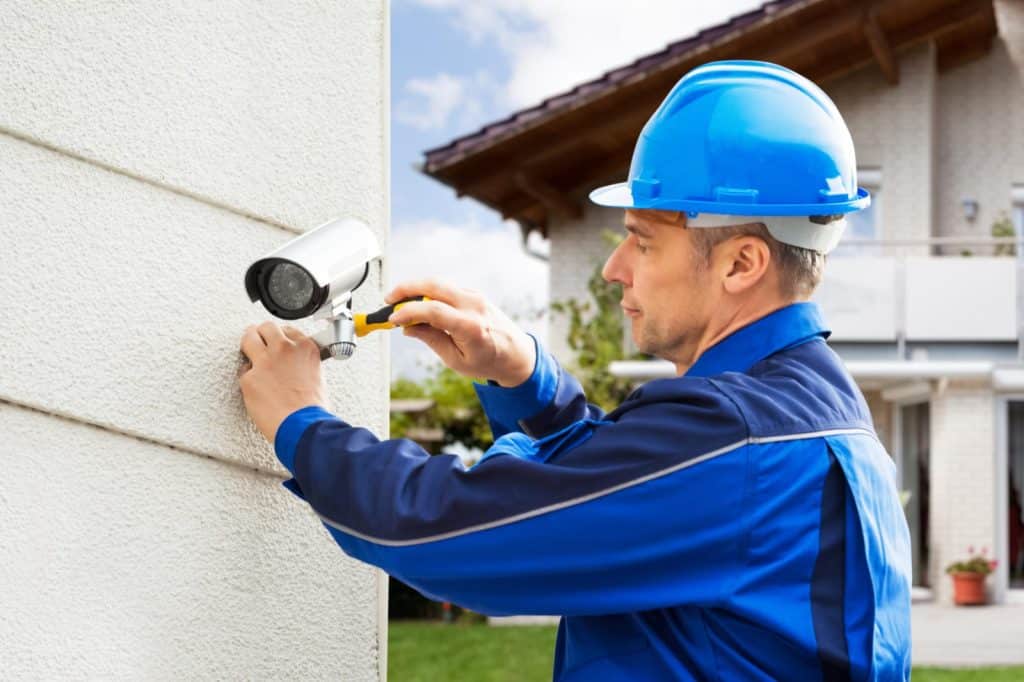
Security camera installation near me means hiring a nearby installer to assess your property, recommend suitable cameras, place them correctly, connect and configure the system, and make sure recording, remote access and privacy settings work for your location. In Australia, the best installers also explain local compliance and support needs.
Why Australians search for security camera installation near me
Most searches start with a practical concern. Someone has had a parcel stolen. A business owner wants better after-hours coverage. A warehouse manager needs visibility over loading bays. A family wants to check who is at the front door. In each case, local intent matters. People want someone nearby who can inspect the property, recommend the right field of view, run cables neatly, test the app, and return quickly if there is a fault.
That is why “near me” is such a strong search phrase. It signals urgency, local trust and a preference for installers who understand Australian homes, weather and site conditions. A coastal property in Queensland, for example, may need extra thought around corrosion resistance and glare. A Melbourne laneway business may need tighter angles, lower-light performance and careful signage. A Perth warehouse may need long-range coverage and reliable remote access for managers who travel.
Local installers also tend to be better at spotting issues that generic online advice misses, such as:
- poor Wi-Fi reach to detached garages
- false motion alerts from trees, pets or headlights
- backlighting from Australian afternoon sun
- weather exposure on external eaves
- access limitations for double-storey homes
- recorder placement in hot roof spaces
Why local security camera installation matters in Australia
Choosing a local provider is not only about convenience. It is also about fit.
A nearby installer can usually do four things better than a remote seller or box-shifting retailer.
1. Site-specific advice
Every property has unique lines of sight, lighting conditions and entry risks. A local installer can walk the site and spot blind zones that a floor plan or phone call will not reveal.
2. Faster support
If a power supply fails, the recorder goes offline or a camera shifts in bad weather, response time matters. Local support can reduce downtime.
3. Better compliance awareness
In Australia, privacy and surveillance obligations can differ depending on whether the site is residential, commercial or workplace-based. The OAIC notes that the Privacy Act covers many organisations, while state and territory laws may also apply to security cameras and workplace monitoring. business.gov.au also advises businesses to understand privacy legislation and surveillance regulation before installing video surveillance.
4. Cleaner installation quality
Neat cable runs, correct weatherproofing, sensible recorder placement and proper app setup are what turn a camera system into a reliable security asset.
For readers comparing options now, a sensible next step is to review a professional security camera installation service in Australia and see whether the provider offers on-site assessment, local support and post-install training.
DIY vs professional security camera installation near me
Some Australian households do fine with a simple DIY doorbell camera or a small two-camera Wi-Fi kit. However, once you move into larger homes, multi-entry properties, shops, offices or warehouses, professional installation often delivers better value over time.
| Option | Best for | Pros | Limits |
|---|---|---|---|
| DIY wireless kit | Small homes, renters, basic front-door coverage | Lower upfront cost, faster setup, flexible placement | More dropouts, weaker coverage, more false alerts, limited cable concealment |
| Semi-professional setup | Homes wanting better coverage | Better camera placement, cleaner setup, improved app configuration | Still may rely on Wi-Fi limits if not properly designed |
| Full professional wired system | Larger homes, businesses, warehouses, strata and high-traffic sites | Stable recording, stronger image quality, cleaner power and data design, scalable storage | Higher upfront cost, needs installation planning |
In many cases, the real issue is not whether you can install cameras yourself. It is whether the finished system will reliably capture what you need at the moment you need it. That means identifying faces at gates, reading activity near a front door, covering a side path at night or monitoring a loading bay without blur.
For wired systems, cabling is especially important. The ACMA says people who perform or supervise customer cabling work must follow the relevant cabling provider rules, and registered cabling requirements apply in regulated situations. That is one reason professional installation is often the safer path for more permanent or business-grade systems.
Best camera types for Australian homes and businesses
When looking for security camera installation near me, many people ask which camera is “best”. The better question is which camera is best for the job.
Bullet cameras
These are common for perimeter coverage, driveways and side access. They are visible, which can help with deterrence. They also work well for longer viewing distances.
Dome cameras
These suit soffits, shopfronts and indoor ceilings. They are often more discreet and harder to reposition by hand.
Turret cameras
A strong all-round choice for many Australian homes. They often give excellent image quality, easier aiming and solid infrared performance.
PTZ cameras
Pan-tilt-zoom units can cover large outdoor areas, but they are not always the best default option. A fixed camera watching a known choke point is often more reliable than a moving camera that might be looking elsewhere when an incident occurs.
Doorbell and compact smart cameras
Useful for front doors, courtyards and apartment entries. These are popular for residential searches, but they are not a full replacement for a properly designed multi-camera system.
Thermal or specialised cameras
These are more common in commercial or industrial settings where low-light detection, perimeter monitoring or difficult environmental conditions apply.
A strong installer should explain resolution, lens choice, field of view, storage retention, AI detection settings and low-light performance in plain English, not just sell “8MP” as a magic number.
Where cameras should be installed
Good placement beats flashy specs every time.
For most Australian homes, priority positions include:
- front entry and porch
- driveway and garage
- side paths
- rear sliding doors
- backyard access points
For businesses, common priorities include:
- entrances and exits
- POS areas
- loading docks
- warehouses and stock rooms
- reception areas
- car parks
- shared corridors
The aim is to cover approach paths, not just open space. Wide views can look impressive, but they often reduce detail at the edges. A better design combines overview cameras with tighter-angle cameras at key choke points.
It is also smart to think about:
- sun direction and glare
- nighttime reflections from glass
- neighbour privacy
- signage visibility
- recorder security
- internet and backup power needs
If a provider talks only about the number of cameras and not about line of sight, scene lighting and evidence quality, that is a warning sign.
Typical costs in Australia
Costs vary by property size, camera type, labour complexity, recorder size, storage period and whether cabling already exists. Exact pricing differs by city and job type, so the figures below are broad estimates only, not quotes.
Indicative ranges
- Basic residential setup: often from a few hundred dollars per camera installed for straightforward jobs
- Mid-range home system: commonly several thousand dollars for a multi-camera wired setup with recorder and app setup
- Small business installation: often higher due to extra cameras, signage, network work and retention requirements
- Warehouse or multi-site projects: usually quoted after a site inspection
What changes the price most?
- Number of cameras
- Cable run length and access difficulty
- Single-storey vs double-storey work
- Recorder capacity and storage retention
- Image quality and analytics
- Network configuration and remote access
- After-hours or urgent installation timing
The cheapest quote is rarely the best value. I usually suggest comparing scope, not just price. Ask what is included in the quotation, how footage is stored, whether app setup and handover are included, and how faults are handled after installation.
Privacy, signage and compliance points to check
This is where Australian context matters.
The OAIC says the Privacy Act regulates how Australian Government agencies and many organisations handle personal information, and it can apply where surveillance footage identifies individuals. The OAIC also notes that private household camera use is treated differently from organisational use, and state or territory laws may still apply. For businesses, business.gov.au recommends understanding privacy legislation and surveillance regulation before installing video surveillance.
Here are the key practical points.
Residential properties
For households, privacy law may be narrower than for businesses, but you should still avoid unreasonable intrusion into neighbouring property or private areas where possible. Good camera angles and privacy masking can help.
Businesses and workplaces
If you are recording customers, visitors or staff, you may need clearer policies, signs and internal procedures. The OAIC says employers must follow relevant Australian, state and territory laws for workplace monitoring, and some jurisdictions have specific workplace surveillance laws.
Cabling and installation quality
If installation involves customer cabling work, ACMA cabling rules can apply. The ACMA states that cablers performing or supervising customer cabling work must follow the Telecommunications (Cabling Provider) Rules 2025.
Signage
Clear signage is often a sensible operational step for business sites and shared environments. It helps with transparency and can also support deterrence.
Administrative reminder
These compliance points are general administrative guidance only. They are not legal advice. For business, strata, workplace or multi-tenant installations, it is sensible to have your proposed setup reviewed against the relevant state or territory requirements and your site policies.
How to compare local installers
When choosing a provider for security camera installation near me, use a practical filter.
Ask these questions first
- Do you offer an on-site assessment?
- What camera types do you recommend for my property and why?
- Will the system be wired, wireless or hybrid?
- How long will footage be retained?
- What happens if the internet drops out?
- Who owns the app login and admin access?
- Do you provide signage or privacy masking advice?
- Is training included after installation?
- What warranty and support response times do you offer?
Look for evidence of a strong installer
A good installer will:
- explain blind spots clearly
- talk about night performance, not just daytime footage
- discuss storage and retrieval
- avoid overpromising facial recognition or “perfect” number plate capture
- provide a clear written scope
- explain what is and is not included
Red flags
Be cautious if an installer:
- refuses a site review for a complex property
- quotes unusually low without detail
- cannot explain image retention or export process
- pushes too many cameras without reasoning
- ignores privacy or signage questions
- has no clear support path after handover
Security camera installation checklist
Use this numbered checklist before you book any installer.
- Define the goal
Decide whether you need deterrence, evidence, remote monitoring, staff safety, access control support or all of the above. - List your priority zones
Mark front entry, side access, rear doors, driveways, stock rooms or loading areas. - Choose the recording approach
Decide whether you want local recorder storage, cloud storage or a hybrid setup. - Check internet and power conditions
Weak Wi-Fi, poor switch placement and exposed power points can affect the result. - Ask about night performance
Daytime demos can be misleading. Night images are where many systems fail. - Review privacy and signage needs
Especially important for businesses, shared sites and staff areas. - Confirm who will do the cabling
For jobs involving customer cabling work, make sure the installation approach aligns with the applicable Australian cabling requirements. - Check the handover process
You should receive app setup, user access, basic training and a record of what was installed. - Get the scope in writing
Cameras, recorder, storage, labour, travel, call-out terms and warranty should all be clear. - Plan future growth
Leave room for extra cameras, better storage or integration later.
People Also Ask
How much does security camera installation near me cost in Australia?
For a basic home setup, costs can start relatively modestly, but multi-camera wired systems and commercial jobs usually cost more because labour, access, storage and network setup all increase the scope. The best way to compare is by checking what is included, not just the headline price.
Is it better to choose wired or wireless security cameras?
Wired systems are usually more stable for larger homes and businesses because they reduce Wi-Fi issues and support continuous recording more reliably. Wireless can still suit renters, small homes or entry-level monitoring where flexibility matters most.
Can I install security cameras myself in Australia?
You may be able to install some simple consumer systems yourself, especially battery or plug-and-play units. However, more permanent or business-grade jobs often benefit from professional installation, and ACMA cabling rules can apply where customer cabling work is involved.
Do I need signs for security cameras in Australia?
For businesses and shared environments, signage is often a sensible transparency measure and may support better privacy practice. Requirements vary by context and jurisdiction, so it is worth checking the administrative rules that apply to your premises.
How many cameras do I need for a typical home?
Many homes start with coverage for the front entry, driveway, side access and rear door. The right number depends more on blind spots and access paths than on the size of the block alone.
Q&A: expert answers
1. What is the biggest mistake people make when searching security camera installation near me?
They focus on camera count instead of coverage quality. Four well-placed cameras usually outperform eight poorly placed ones, especially at night or around entry points.
2. Should I prioritise higher resolution or better placement?
Better placement first. Resolution matters, but the wrong angle, too much backlight or excessive distance can make high-megapixel footage far less useful than a lower-resolution camera installed correctly.
3. How long should my system keep recorded footage?
That depends on the site, risk level and operational needs. A home may need a shorter retention period than a busy commercial site, but you should decide this before buying because storage capacity affects cost and system design.
4. Are smart features like person detection worth paying for?
Usually yes, when configured properly. Smart detection can reduce false alerts from trees, pets or traffic, but it still needs sensible camera positioning and app tuning to be useful.
5. What should I expect on installation day?
A professional installer should confirm camera positions, complete mounting and cabling, configure recording and remote access, test image quality, and walk you through playback and export. You should also receive a clear handover of access details and basic operating instructions.
Conclusion
Finding the right security camera installation near me in Australia comes down to more than choosing a nearby provider. You want a local installer who understands camera placement, recording reliability, privacy considerations, support response and the practical realities of Australian homes and businesses.
The best results come from a system designed around your property, not a generic package. That means clearer coverage, fewer blind spots, better night performance and a setup you can actually rely on. When you are ready to compare options, speak with a local provider that can assess your site properly, explain the technical choices in plain English and help you plan a system that fits your goals.
For readers who want a practical next step, review Australia-wide security camera solutions with expert installation support and compare the proposed scope, support and site advice before you decide.
Useful external references: