

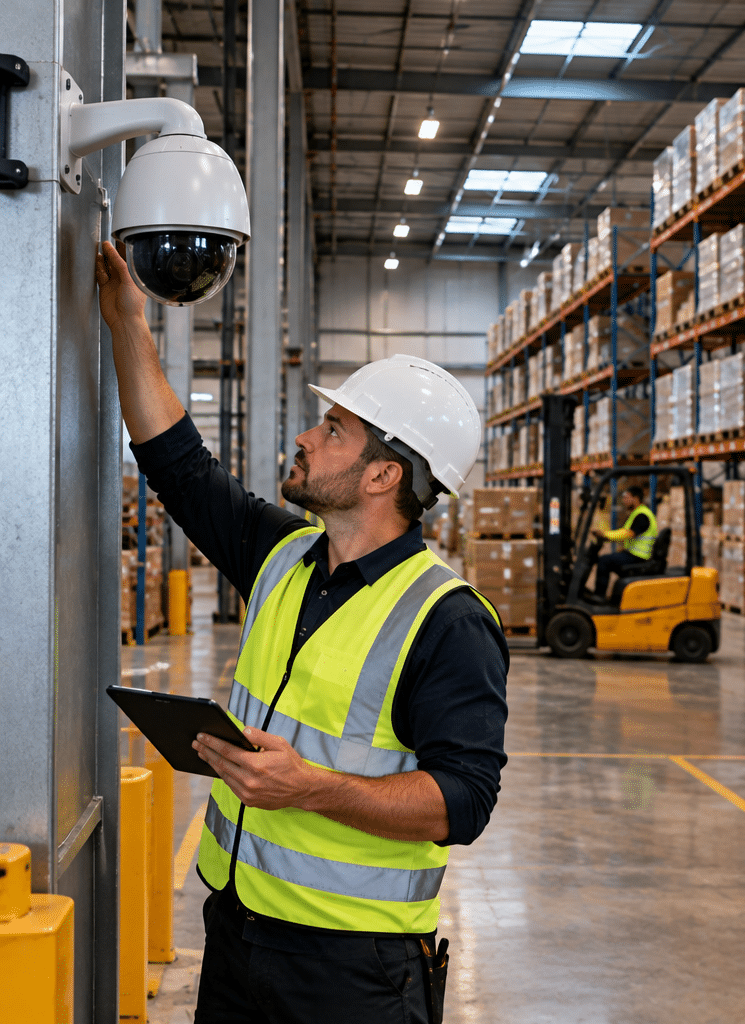
Factory & Warehouse Security Melbourne is an important consideration for businesses that want to protect valuable inventory, machinery, employees and industrial premises from security threats. Across Melbourne, factories, distribution centres and warehouses handle substantial volumes of goods, equipment and deliveries every day. However, large buildings, busy loading docks, multiple access points and after-hours operations can create security risks that ordinary commercial security systems may not address.
For business owners, facility managers and warehouse operators, effective security involves more than installing CCTV cameras. A well-planned solution combines surveillance, access control, intrusion detection, physical protection and clear emergency procedures. Understanding how these systems work together can help businesses make informed decisions, reduce avoidable vulnerabilities and maintain reliable daily operations.
What Is Factory & Warehouse Security Melbourne?
Factory & Warehouse Security Melbourne refers to the planning, installation and management of security measures for industrial premises across Melbourne. It typically combines CCTV cameras, access control, intrusion alarms, physical barriers and response procedures to help deter unauthorised entry, protect stock and support safer, more accountable day-to-day operations.
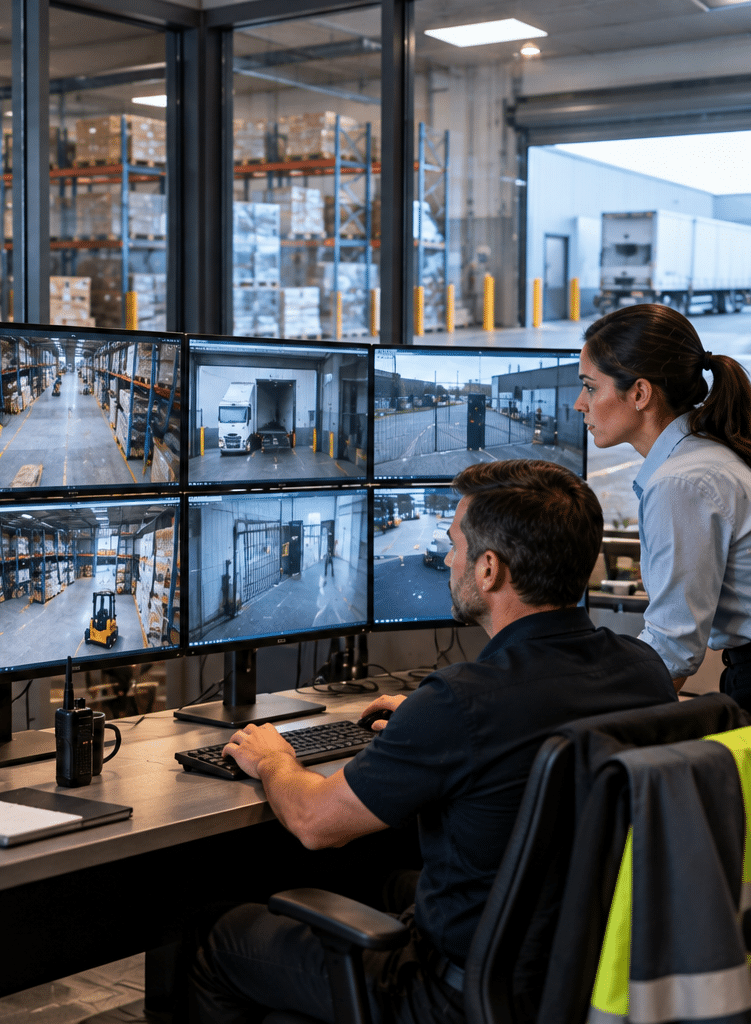
Table of Contents
- Why Factory and Warehouse Security Matters in Melbourne
- Understanding Security Risks in Industrial Properties
- Essential Security Systems for Melbourne Factories and Warehouses
- Comparing Warehouse Security Solutions
- Factory & Warehouse Security Melbourne for Different Industries
- Warehouse Security and Workplace Safety
- Victorian Security Licensing and Privacy Considerations
- Factory and Warehouse Security Costs in Melbourne
- Step-by-Step Security Installation Checklist
- Choosing a Warehouse Security Installation Provider
- Security Maintenance and Performance Monitoring
- People Also Ask
- Expert Questions and Answers
- Conclusion
1. Why Factory and Warehouse Security Matters in Melbourne
Melbourne is home to a wide range of industrial and logistics operations. From manufacturing facilities in Dandenong South to distribution centres in Truganina and Laverton North, commercial properties require security systems suited to their operations.
Unlike a typical office building, a warehouse may contain thousands of individual products, multiple loading bays, large storage areas and heavy machinery. Furthermore, employees, delivery drivers, contractors and visitors may enter at different times throughout the day.
As a result, warehouse security must address several challenges at once.
Protecting valuable goods and equipment
Warehouses often store products that are valuable, portable or difficult to replace.
These may include electrical products, manufacturing components, construction materials, industrial tools and finished goods awaiting distribution.
Unauthorised entry, theft or deliberate damage can lead to more than the immediate loss of property. Businesses may also experience delayed deliveries, replacement costs and operational disruption.
Therefore, a security system should protect both valuable assets and the processes that keep the business operating.
Managing multiple entry and exit points
Factories and warehouses commonly have more entry points than standard commercial buildings.
These may include:
- Main staff entrances and reception areas.
- Loading docks and delivery access points.
- Roller shutters and vehicle gates.
- Emergency exits and service doors.
- Contractor entrances and external storage yards.
Each access point creates a different level of risk.
For example, a delivery gate may need frequent access during working hours. However, the same gate should remain secured when the site is unattended.
A suitable security system should support this changing operational environment.
Supporting business continuity
Security incidents can disrupt production schedules, stock movements and customer commitments.
For a manufacturer, damage to specialised equipment may delay an entire production process. Similarly, a distribution centre may experience delivery delays when stock is missing or a loading area becomes inaccessible.
Therefore, business security should focus on preventing incidents where practical and improving the ability to respond when they occur.
Improving incident investigation
Modern CCTV systems can provide useful recordings of activity around warehouses and factories.
For instance, video footage may help managers establish when a delivery arrived, which vehicle entered a designated area or whether an unauthorised person approached a restricted entrance.
However, CCTV footage is only useful when cameras are positioned correctly, recordings are retained appropriately and authorised staff can retrieve the relevant information.
2. Understanding Factory & Warehouse Security Melbourne Risks
Before selecting any equipment, businesses should identify the risks associated with their specific premises.
A small manufacturing workshop will have different requirements from a large distribution centre operating around the clock.
Consequently, a site assessment should come before equipment selection.
External security threats
External threats may include unauthorised entry, trespassing, theft, vandalism and damage to vehicles or equipment.
Large industrial properties can be particularly challenging because fences, buildings and storage containers may create areas that are difficult to observe.
Additionally, neighbouring premises may have different operating hours, leaving parts of an industrial estate quiet overnight.
Businesses should consider whether existing lighting, gates, fences and surveillance coverage provide suitable protection.
Internal security vulnerabilities
Not every security weakness involves someone entering from outside.
Internal vulnerabilities can arise when access permissions are too broad, keys are not controlled or sensitive storage areas remain accessible to unnecessary personnel.
For example, a warehouse employee responsible for order packing may not require access to a server room or an area containing expensive production equipment.
Role-based access control can help address these issues without disrupting legitimate work.
Loading dock vulnerabilities
Loading docks are among the busiest areas of many industrial properties.
Vehicles arrive, drivers exchange paperwork and goods move between buildings and trucks.
During these activities, doors may remain open and temporary visitors may enter operational areas.
Therefore, loading zones should receive particular attention during a security assessment.
Useful controls may include cameras, intercoms, door sensors, clearly marked visitor procedures and appropriately configured vehicle access systems.
After-hours security
An industrial facility may be busy during the day but largely unattended overnight.
This creates different security requirements.
While daytime security often focuses on authorised movement and controlled access, after-hours protection may place greater emphasis on intrusion detection, perimeter security and alarm response.
For that reason, a good security plan should consider both operating and non-operating hours.
A practical risk assessment approach
Start by examining how people, vehicles and goods move through the property.
Ask which areas contain valuable assets, which doors are frequently left open and which activities occur outside normal business hours.
Next, identify points where an incident could occur without being noticed.
Finally, match the most suitable security controls to each identified risk.
This approach avoids purchasing unnecessary equipment while leaving important areas unprotected.
3. Essential Factory & Warehouse Security Melbourne Systems
Effective industrial security usually relies on several connected technologies.
Each system has a different purpose. Therefore, businesses should understand the function of each component before making an investment.
3.1 CCTV security camera systems
Closed-circuit television, commonly called CCTV, is one of the most widely used technologies for monitoring commercial and industrial premises.
A warehouse CCTV system may cover entrances, loading docks, storage aisles, external yards and vehicle access points.
However, camera placement is often more important than the number of cameras installed.
Choosing appropriate camera locations
Cameras should be positioned according to the information the business needs to capture.
For example, a wide-angle camera may provide useful general coverage of a warehouse floor. However, it may not capture enough facial detail to identify someone at a distant doorway.
Similarly, a camera overlooking a loading bay may record vehicle movements without producing readable number plates.
Therefore, managers should define each camera’s purpose before installation.
Typical purposes include observing activity, detecting unusual movement and capturing sufficient detail to support incident review.
Indoor and outdoor camera considerations
Indoor cameras must account for warehouse lighting, high ceilings and storage racks that may block the view.
Outdoor cameras must also handle changing sunlight, rainfall, reflections and low-light conditions.
In Melbourne, variable weather conditions make proper outdoor equipment selection particularly important.
Suitable camera housings, protective mounting locations and appropriate environmental ratings can help improve reliability.
Night-time recording
Warehouses may require surveillance when little artificial lighting is available.
Infrared cameras can record scenes in low-light environments, while other systems use visible lighting or specialised low-light sensors.
However, infrared performance varies according to distance, reflective surfaces and environmental conditions.
For that reason, businesses should request a night-time demonstration rather than relying only on product specifications.
Video storage and retention
A network video recorder, or NVR, can store footage from internet protocol cameras.
The amount of required storage depends on camera resolution, frame rate, compression, recording schedule and retention period.
For example, continuous recording generally consumes more storage than event-based recording, although actual requirements vary by configuration.
Businesses should calculate storage needs before installation and confirm that footage remains available for the agreed period.
3.2 Access control systems for factories and warehouses
Access control systems help businesses manage who can enter particular areas and when.
Instead of relying entirely on traditional keys, electronic systems may use access cards, PINs, mobile credentials or other authorised methods.
This approach can be useful in warehouses where employees work different shifts.
For example, an operations manager may require access to the entire facility, while a temporary contractor may only need access to a specific maintenance area.
Benefits of electronic access control
Electronic permissions can be adjusted when employees change roles or leave the business.
Furthermore, many systems maintain records of credential use.
These records can help authorised managers review access events when investigating incidents.
However, the records do not automatically prove who physically entered a door. Shared credentials and tailgating can reduce their reliability.
Therefore, credential management and appropriate physical controls remain important.
Preventing unauthorised access
Access-controlled doors may be combined with intercoms, CCTV and visitor procedures.
For instance, a delivery driver could contact reception through an intercom before staff authorise entry.
This process provides a more controlled alternative to leaving doors permanently unlocked.
Nevertheless, access-controlled doors must be designed to meet applicable emergency escape and building safety requirements.
A qualified professional should review these requirements before installation.
3.3 Intrusion detection and commercial alarm systems
Intrusion alarms are designed to identify events that may indicate unauthorised access.
Common components include motion detectors, door contacts, glass-break detectors and alarm control panels.
In a warehouse, different areas may require separate alarm zones.
For example, the main warehouse could remain active overnight while authorised cleaners access an office section.
Zoning allows the system to support these operational differences.
Why alarm zoning matters
Without suitable zoning, businesses may experience unnecessary alarms when authorised personnel enter a protected area.
Repeated false alarms can reduce confidence in the system and create avoidable interruptions.
Therefore, alarm settings should reflect operating hours, staff movements and site conditions.
Alarm monitoring and response
A monitored alarm can send signals to a monitoring service when specific events occur.
Depending on the agreed service, operators may follow a documented process to contact nominated staff or arrange an appropriate response.
However, monitored alarms do not guarantee police attendance or immediate intervention.
Businesses should confirm response arrangements, escalation procedures, service limitations and ongoing fees before entering an agreement.
3.4 Perimeter security and physical protection
Electronic security works best when supported by appropriate physical measures.
A perimeter security plan may include secure gates, fencing, door hardware, lighting and suitable barriers.
For example, a camera can record someone approaching an external gate, but a properly designed gate helps restrict access in the first place.
Similarly, perimeter lighting can improve visibility and assist camera performance.
However, bright lighting should be positioned carefully to avoid glare and excessive impact on neighbouring properties.
In addition, security controls should not interfere with emergency access or safe vehicle movement.
3.5 Cybersecurity for connected security systems
Many modern cameras, alarms and access control devices connect to business networks.
This offers useful features such as remote management and event notifications.
However, connected devices also require appropriate cybersecurity controls.
A poorly secured camera or recorder may expose the business to unauthorised access or service disruption.
Useful protections include strong passwords, multi-factor authentication where available, software updates and restricted administrative permissions.
Furthermore, businesses can consider separating security devices from ordinary office network traffic.
This is sometimes called network segmentation.
It reduces unnecessary connectivity between systems and can help limit the impact of a compromised device.
Before installation, ask who will manage software updates, passwords, remote access and cybersecurity incidents.
4. Comparing Melbourne Factory and Warehouse Security Solutions
Different security technologies solve different problems.
Therefore, comparing their functions can help businesses select a balanced system.
| Security solution | Primary purpose | Suitable locations | Important limitation |
| CCTV cameras | Record and observe activity | Entrances, storage areas, loading docks | Footage may not prevent an incident |
| Access control | Restrict and manage entry | Staff doors, offices, restricted rooms | Shared credentials can weaken control |
| Intrusion alarms | Detect possible unauthorised entry | Perimeters, doors, unattended zones | False alarms require management |
| Alarm monitoring | Provide event escalation | After-hours industrial sites | Response depends on service arrangements |
| Intercom systems | Verify visitors before entry | Reception, delivery gates, service entrances | Requires a suitable answering procedure |
| Security lighting | Improve visibility | External yards, gates, vehicle areas | Poor positioning can cause glare |
| Fencing and gates | Provide physical access barriers | Property boundaries and yards | Requires inspection and maintenance |
| Integrated security | Coordinate several security functions | Multi-building industrial properties | Greater setup and management complexity |
Which solution is best?
There is no single system that suits every factory or warehouse.
A small workshop may benefit from a straightforward combination of CCTV, secure doors and intrusion alarms.
Conversely, a large distribution centre may require centralised access control, multiple camera zones, monitored alarms and detailed incident procedures.
The right choice depends on the site’s layout, operating model, risks and available budget.
5. Factory & Warehouse Security Melbourne for Different Industries
Industrial properties perform different functions, so security requirements should reflect their actual operations.
Manufacturing and production facilities
Manufacturing businesses often rely on specialised equipment, raw materials and continuous production processes.
Security incidents affecting these assets may interrupt production even when relatively little property is stolen.
Therefore, manufacturing security may prioritise access to production floors, machinery rooms, chemical storage areas and high-value inventory.
CCTV can also support the review of security-related incidents around designated equipment zones.
However, cameras should not be treated as replacements for machine guarding or other workplace safety controls.
Logistics and distribution centres
Distribution centres frequently handle large numbers of deliveries, employees and contractors.
As a result, security planning should focus heavily on loading docks, gate access, shipment staging areas and after-hours activity.
For example, an access-controlled gate combined with an intercom may help staff manage arriving drivers.
Meanwhile, suitable CCTV coverage can support reviews of loading and dispatch events.
Businesses should also consider whether temporary labour arrangements require regularly updated access permissions.
Food storage and cold-storage facilities
Cold-storage warehouses present additional technical challenges.
Some storage areas operate at temperatures that are unsuitable for standard electronic equipment.
Humidity, condensation and changes in temperature can also affect camera performance.
Therefore, equipment used in these environments should be rated for the actual operating conditions.
Furthermore, maintenance access and installation methods should avoid compromising refrigeration systems or insulated building surfaces.
Automotive and industrial parts warehouses
Automotive warehouses may contain components with substantial resale value.
Because many items are small and portable, stock protection may require careful control of high-value storage areas.
For instance, access permissions can be limited to authorised inventory personnel.
CCTV may then provide supporting records of activity around restricted areas.
However, security technology should complement inventory controls rather than replace them.
Multi-tenant industrial buildings
Some Melbourne industrial properties are shared by several businesses.
These premises can require more complex arrangements because different tenants may need separate access permissions and recording rights.
Shared gates, corridors and parking areas also raise questions about management responsibility.
Therefore, landlords and tenants should agree on access arrangements, maintenance responsibilities and authorised footage access before implementing a shared system.
6. Melbourne Warehouse Security and Workplace Safety
Security and workplace safety are connected, but they are not the same.
A security camera may provide information about an incident, while a physical safety barrier can help prevent people from entering a hazardous area.
Both may be useful. However, one should not be substituted for the other without a proper risk assessment.
Forklifts and pedestrian movement
Forklifts are common in factories, distribution centres and warehouses.
They also create significant hazards when operating near pedestrians.
According to WorkSafe Victoria’s transport, logistics and warehousing safety guidance, common workplace risks include being struck by forklifts and trucks, injuries from moving goods, falls and fatigue associated with shift work.
Therefore, warehouse managers should assess vehicle movements, pedestrian routes and loading procedures as part of broader site planning.
CCTV may assist in reviewing incidents or identifying operational issues.
However, physical separation, safe traffic management and appropriate work procedures remain essential.
Loading dock safety
Loading docks combine security challenges with significant movement-related hazards.
For example, trucks may reverse near pedestrians while forklifts transfer goods between vehicles and storage areas.
A properly designed site should provide suitable traffic arrangements and clearly defined areas for drivers and workers.
Security equipment should be positioned without blocking visibility, obstructing routes or interfering with safety controls.
In addition, alarm sensors and cameras should be installed where they are unlikely to be damaged by routine vehicle movement.
Emergency exits and evacuation
Security systems should never create an unsafe obstacle during an emergency.
Electronic locks, controlled doors and automated gates must be assessed against relevant building and fire safety requirements.
Therefore, emergency release mechanisms, evacuation arrangements and system behaviour during power failures should be reviewed by appropriately qualified professionals.
The aim is to maintain reasonable security without compromising safe escape.
7. Factory & Warehouse Security Melbourne: Licensing and Privacy
Security installation in Victoria involves more than selecting equipment.
Businesses should also consider the regulatory requirements that apply to security providers and the handling of recorded information.
Victorian private security licensing
According to Victoria Police’s private security guidance, the state’s private security industry is regulated by its Licensing and Regulation Division.
Victoria Police identifies security equipment installation and security advice as private security activities.
The licensing framework changed from 19 June 2025, with private security activities moving under a licensing regime.
As a result, businesses engaging security providers should verify that the relevant business and individuals hold appropriate authorisations for the work being performed.
An administrative check may involve confirming the provider’s details against the Victoria Police public register and reviewing the activities covered by the authorisation.
These checks can help businesses evaluate providers before work begins.
However, licensing requirements can change. Businesses should confirm current obligations with Victoria Police or an appropriately qualified adviser.
CCTV privacy in the workplace
CCTV systems may capture identifiable images of employees, visitors and contractors.
Therefore, businesses should consider how recordings are collected, stored, accessed and disclosed.
The Office of the Australian Information Commissioner guidance on workplace monitoring and surveillance explains that workplace monitoring can involve Australian, state and territory laws.
It also notes that the Australian Privacy Principles may apply in relevant circumstances.
Importantly, privacy obligations depend on the organisation and the circumstances.
Businesses should avoid assuming that installing a camera automatically permits every type of monitoring or recording.
Practical privacy administration
A sensible CCTV management process includes identifying the reason for recording, informing relevant people where appropriate and restricting access to footage.
For example, a warehouse may use cameras for property protection and incident investigation.
However, access to those recordings should normally be limited to staff who have a genuine business need.
Businesses should also establish procedures for responding to footage requests and deleting recordings when no longer required.
Audio recording requires particular care because additional legal restrictions may apply.
Consequently, businesses should obtain appropriate advice before enabling audio capture.
Managing footage securely
Recorded video can contain sensitive information about business operations and identifiable people.
Therefore, recordings should be protected against unauthorised viewing, copying and deletion.
Practical safeguards may include named user accounts, access logs, secure remote connections and controlled export procedures.
When an incident occurs, the business should preserve relevant recordings in a suitable format.
Staff should also document who accessed or exported the footage.
These are useful administrative practices rather than substitutes for legal advice.
8. Factory and Warehouse Security Costs in Melbourne
The cost of a factory or warehouse security installation depends on the property’s size, system design and operational requirements.
A small industrial workshop may need only a limited number of devices.
By comparison, a large multi-building facility may require extensive cabling, external infrastructure, integrated software and ongoing monitoring.
For this reason, reliable pricing should be based on an actual site assessment.
Factors affecting CCTV installation costs
The number of cameras is only one factor.
Installation costs may also depend on cable routes, mounting height, lighting conditions and the type of recording equipment.
For example, cameras installed on high warehouse ceilings may require specialised access equipment.
Similarly, long distances between buildings may create additional network or cabling requirements.
Storage capacity can also influence costs, especially when businesses require high-resolution recording over extended periods.
Access control installation costs
Access control pricing depends on the number and type of controlled doors, the hardware selected and the desired software functions.
An individual office door may be relatively straightforward to equip.
However, controlling a large industrial gate may involve additional equipment and safety integration.
Furthermore, systems that connect multiple facilities or support centralised credential management may require more complex configuration.
Ongoing security expenses
Initial installation is only part of the total cost.
Businesses should also consider maintenance, monitoring subscriptions, software licences, connectivity, equipment replacement and technical support.
These recurring expenses can be important over the life of the system.
Therefore, comparing quotations only on upfront price may produce a misleading result.
How to compare security quotations
Ask each provider to quote against the same written requirements.
A useful quotation should identify equipment specifications, installation work, recording capacity, warranties and ongoing charges.
It should also explain what is excluded.
For example, a quotation may exclude electrical work, network upgrades or additional equipment needed for difficult mounting locations.
Request prices in Australian dollars and confirm whether GST is included.
Most importantly, evaluate whether the proposal addresses the property’s actual security risks.
A lower-priced system is not necessarily better value if it leaves important areas unprotected or requires costly upgrades soon after installation.
9. Factory & Warehouse Security Melbourne Installation Checklist
A structured installation process can help businesses avoid common planning mistakes.
Use the following checklist when preparing a new security project or upgrading existing systems.
Step-by-step warehouse security checklist
- Identify critical assets. List valuable stock, machinery, IT equipment, vehicles and sensitive storage areas. Rank these according to their operational importance and possible exposure.
- Review the property layout. Examine entrances, loading docks, roller doors, gates, external yards and internal movement routes. Include areas that become difficult to observe when stock or vehicles are present.
- Assess existing protection. Check current cameras, locks, alarms, lighting and access procedures. Record faults, outdated equipment and areas with limited coverage.
- Define security objectives. Decide whether each proposed control is intended to deter entry, detect movement, restrict access, support response or provide useful incident records.
- Arrange a professional site assessment. Ask an appropriately authorised provider to review the premises and explain the recommended equipment locations.
- Confirm technical requirements. Review camera image quality, recording storage, network capacity, environmental ratings and power arrangements. Consider future expansion as well.
- Review workplace safety and privacy. Confirm that the design does not obstruct emergency exits or create unsafe conditions. Review monitoring notices, footage access and relevant compliance requirements.
- Compare detailed quotations. Evaluate equipment quality, proposed coverage, installation work, warranties, monitoring arrangements and recurring expenses.
- Plan installation around operations. Schedule cabling, drilling and equipment installation to minimise disruption. Coordinate work near production lines and vehicle movement areas.
- Complete functional testing. Test cameras in daytime and darkness. Check alarm zones, controlled doors, event notifications, recording playback and relevant power-failure behaviour.
- Train authorised employees. Explain how to operate the system, manage credentials, respond to alarms and retrieve footage. Assign responsibility for daily administration.
- Document and review the system. Obtain equipment details, configuration records, user instructions and maintenance arrangements. Review performance after operational changes.
Following this process can make security decisions easier to understand and maintain.
It also creates a useful record for future upgrades.
10. Choosing a Factory and Warehouse Security Installer in Melbourne
Selecting the right provider is an important part of a successful security project.
Industrial environments can be challenging because systems must operate around large storage areas, machinery, vehicles and sometimes continuous production.
Therefore, businesses should look beyond general product descriptions.
Experience with industrial premises
Ask whether the provider has worked with facilities similar to yours.
Relevant experience may include manufacturing sites, distribution centres, warehouses and commercial properties with multiple access points.
An installer familiar with industrial layouts may be better prepared to identify practical issues involving camera visibility, cabling and equipment protection.
However, previous experience should be supported by clear examples of relevant work rather than unsupported claims.
Site-specific security recommendations
A suitable provider should explain why each recommended device is needed.
For instance, an installer may recommend a dedicated camera near a loading dock to capture activity that a general warehouse camera cannot record clearly.
Likewise, they may suggest access control for a restricted room instead of adding unnecessary cameras.
The goal is to solve identified security problems rather than maximise equipment quantities.
Integration capability
Some businesses already have cameras, alarms or electronic locks installed.
In these cases, replacing every component may not be necessary.
An experienced provider can assess whether existing equipment is compatible with the proposed system.
However, integration depends on supported hardware, communication protocols and software versions.
Therefore, compatibility should be confirmed before a final quotation is accepted.
Training and ongoing support
Security technology is only useful when authorised staff understand how to use it.
Businesses should ask whether the installation includes user training, system documentation and practical demonstrations.
Additionally, confirm the arrangements for repairs, maintenance and software updates.
A reliable support process can reduce unnecessary disruption when equipment requires attention.
11. Maintaining Melbourne Warehouse Security Systems
Security installation should be treated as an ongoing responsibility rather than a one-time project.
Industrial environments change regularly.
New storage racks may be installed, machinery may move and additional loading areas may become operational.
As a result, systems that originally provided suitable coverage can develop blind spots over time.
Regular CCTV maintenance
Cameras should be inspected for physical damage, dirt, blocked views and changes in image quality.
External lenses may require cleaning, particularly in dusty industrial environments.
Recording systems should also be checked to confirm that footage is being stored and can be retrieved.
Importantly, the presence of a live camera image does not always mean recording is functioning correctly.
Therefore, playback testing should form part of routine maintenance.
Alarm testing
Intrusion detectors, door contacts and alarm communication paths should be tested according to the system’s requirements and agreed maintenance schedule.
Staff should also confirm that nominated contacts and escalation instructions remain accurate.
For example, an alarm notification sent to a former employee may delay the appropriate response.
Consequently, contact details should be reviewed whenever responsible personnel change.
Access control administration
Employee access rights should reflect current operational responsibilities.
When a worker leaves the business, their electronic permissions should be removed promptly through an established process.
Similarly, temporary credentials should have suitable restrictions.
Periodic access reviews can help identify accounts that are no longer necessary.
Measuring security performance
Businesses can track several practical measures to understand whether their security arrangements remain useful.
Examples include the number of unexplained alarm activations, the time needed to retrieve incident footage and the frequency of equipment faults.
Managers can also review whether access permissions remain accurate and whether important security issues are resolved promptly.
However, a reduced number of reported incidents does not automatically prove that a particular security device prevented crime.
Performance reviews should consider operational changes, reporting practices and other relevant factors.
Planning future upgrades
As a business expands, security requirements may change.
A warehouse adding another loading dock may require new surveillance coverage.
Similarly, a manufacturer introducing a restricted production area may need additional access controls.
Therefore, systems should be reviewed when the site’s layout, workforce or operating hours change.
Planning for expansion during the initial design can help reduce future costs and disruption.
12. People Also Ask About Factory & Warehouse Security Melbourne
What security system does a Melbourne warehouse need?
A Melbourne warehouse may need CCTV cameras, access control, intrusion alarms and physical barriers, depending on its risks and layout. A professional site assessment can determine which combination is suitable for the property.
Are CCTV cameras enough to secure a factory?
CCTV cameras can provide surveillance and useful incident recordings, but they do not physically prevent unauthorised entry. Combining cameras with secure doors, alarms and suitable access controls generally provides broader protection.
How many security cameras does a warehouse need?
The required number depends on the building’s size, storage layout, entry points and desired recording detail. A camera coverage plan is more reliable than estimating requirements from floor area alone.
Can warehouse owners monitor security cameras remotely?
Many network-connected CCTV systems support authorised remote viewing through secure applications or management platforms. However, remote access should be protected with strong authentication, suitable permissions and secure network settings.
Should Melbourne factories install monitored alarm systems?
Monitored alarms may be useful for facilities with valuable assets, limited overnight staffing or a need for organised alarm escalation. Businesses should compare service costs, response procedures and coverage limitations before choosing monitoring.
13. Expert Q&A: Factory & Warehouse Security Melbourne
Q1. How long should a warehouse keep CCTV recordings?
There is no single retention period that automatically suits every Australian warehouse.
The appropriate period depends on the purpose of recording, applicable legal requirements, contractual obligations and the organisation’s operational needs.
For instance, a facility that investigates delivery discrepancies may need a different retention arrangement from a site that records only security alarms.
Businesses should establish a documented retention policy and ensure their recording system has sufficient storage to support it.
Where footage relates to an incident, preserving the relevant recording may be necessary.
However, recordings should not be retained indefinitely without a legitimate reason and consideration of applicable privacy requirements.
Q2. How can factories manage contractors and temporary workers securely?
Factories should use a documented process for granting and removing temporary access permissions.
For example, a maintenance contractor may receive access only to the areas and periods required to complete the job.
Electronic access control can support this process by allowing administrators to assign time-limited credentials.
However, staff must still verify identities and manage visitor entry appropriately.
In addition, temporary workers should receive relevant safety information before entering operational areas.
Access control should support workplace procedures rather than replace them.
Q3. What happens to warehouse security during a power or internet outage?
The outcome depends on the system’s design.
Some security systems include backup batteries or uninterruptible power supplies, commonly called UPS units.
These can provide temporary power to selected equipment.
However, backup duration depends on battery capacity and the equipment connected.
Internet outages may also affect cloud services, remote access and alarm communications.
Therefore, businesses should ask installers to explain which functions remain available during different failures.
Critical requirements should be tested during commissioning rather than assumed.
Q4. How can businesses check whether CCTV cameras cover important warehouse areas?
Businesses can conduct a structured coverage review using the site’s operational layout.
First, identify important locations such as entry points, restricted storage areas and loading zones.
Next, inspect live camera views and recorded footage to confirm that the required details are visible.
Testing should include different lighting conditions and normal site activity.
For example, parked trucks, stacked pallets and moving forklifts may temporarily block cameras.
Consequently, practical testing should use realistic working conditions instead of relying only on an empty warehouse demonstration.
Q5. What security records are useful after a warehouse incident?
Useful records may include CCTV footage, access events, alarm logs, incident reports and relevant equipment maintenance information.
These records can help authorised personnel establish a timeline and understand what occurred.
However, their usefulness depends on accuracy, time synchronisation and appropriate handling.
For example, camera and access control clocks should be correctly configured so records can be compared.
Businesses should also document who retrieved or exported relevant footage.
Where an incident involves police, insurers or legal proceedings, the organisation should follow the appropriate evidence-handling instructions and obtain professional advice when necessary.
14. Conclusion: Building Stronger Factory & Warehouse Security in Melbourne
Factory & Warehouse Security Melbourne requires a practical approach that reflects the unique challenges of industrial properties.
Factories and warehouses often contain valuable goods, specialist machinery, multiple entry points and busy operational areas. Consequently, relying on a single security measure may leave important vulnerabilities unaddressed.
A well-designed security strategy brings together CCTV surveillance, access control, intrusion detection, physical protection and clear response procedures.
Equally important are appropriate installation, employee training, privacy administration and ongoing maintenance.
For Melbourne businesses, the most effective starting point is a detailed assessment of the premises. This helps identify priority risks and supports investment in equipment that meets genuine operational needs.
Eclipse Security Systems provides commercial security solutions, including CCTV cameras, access control, alarm systems, monitoring and security installation services.
If you are planning a new industrial security installation or reviewing an existing system, explore Eclipse Security’s commercial security solutions and request a security assessment.
Taking a structured approach today can help your business improve site protection, support responsible security management and prepare for future operational changes.