
On this page20
- Introduction
- What Are CCTV Installation Services Melbourne?
- 1. What Do Professional CCTV Installation Services Melbourne Include?
- 2. Why Melbourne Properties Benefit From Professional CCTV Systems
- 3. Planning CCTV Installation Services Melbourne Properties Actually Need
- 4. Where Should CCTV Cameras Be Installed?
- 5. Choosing the Right Cameras for CCTV Installation Services Melbourne
- 6. Wired vs Wireless vs Cloud CCTV Installation Systems
- 7. CCTV Installation Services Melbourne: Recording and Storage
- 8. CCTV Installation Services Melbourne: A 10-Step Installation Checklist
- 9. How Much Do CCTV Installation Services Melbourne Cost?
- 10. Victorian Licensing, Privacy and CCTV Compliance
- 11. Cyber Security for CCTV Installation Services Melbourne
- 12. Commercial CCTV Installation Services Melbourne Businesses Need
- 13. Integrating CCTV With Other Security Systems
- 14. CCTV Maintenance and Long-Term Performance
- 15. Common Mistakes When Choosing CCTV Installation Services Melbourne
- 16. People Also Ask: CCTV Installation Services Melbourne
- 17. Frequently Asked Questions About CCTV Installation Services Melbourne
- Conclusion: Choosing CCTV Installation Services Melbourne Property Owners Can Trust
Not sure what your site needs?
A technical consultant from our Hallam office will look at the site and recommend a system, free of charge.
Request an assessment 1300 66 11 99Introduction
CCTV installation services Melbourne are an important consideration for homeowners, business owners and property managers who want to improve security, monitor activity and protect valuable assets. However, installing security cameras involves more than choosing a few devices and attaching them to a building. The right system needs careful planning, suitable camera placement, secure recording and reliable ongoing support.
Across Melbourne, security needs can vary between residential properties, retail stores, warehouses, offices, schools and other commercial facilities. For example, a family home in the south-eastern suburbs may need clear views of entrances and driveways. Meanwhile, a warehouse in Dandenong South may require wider coverage, vehicle monitoring and footage that authorised staff can review after an incident.
Therefore, choosing the right CCTV installation services Melbourne property owners can rely on starts with understanding the risks at each site.
This guide explains how professional CCTV installation works, what equipment to consider, how costs are assessed and which Victorian licensing and privacy issues deserve attention. It also covers practical steps for selecting an installer and maintaining a reliable system.
What Are CCTV Installation Services Melbourne?
CCTV installation services Melbourne involve assessing a property's security needs, selecting suitable surveillance cameras, installing equipment and configuring video recording systems. Professional services also include camera positioning, network setup, remote viewing, system testing and user training. The goal is to provide useful footage and reliable monitoring for homes and businesses.
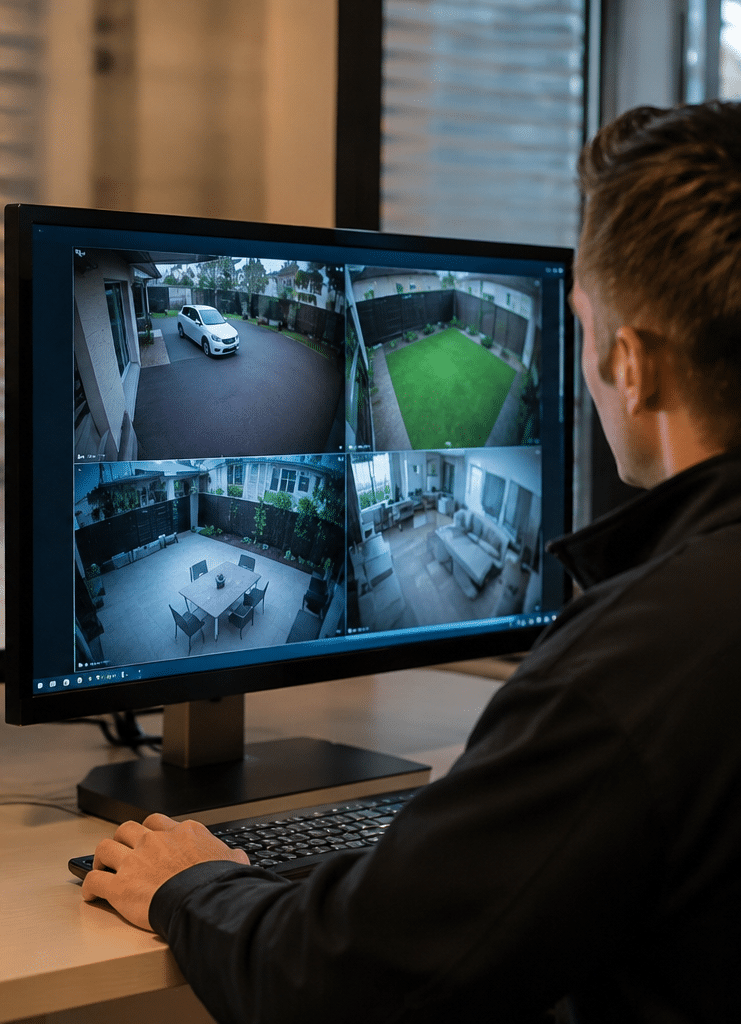
Table of Contents
- What Professional CCTV Installation Services Include
- Why Melbourne Properties Need Professional CCTV Systems
- Planning CCTV Camera Coverage for Your Property
- Choosing the Right Security Cameras
- Comparing Wired, Wireless and Cloud CCTV Systems
- Video Recording, Storage and Remote Monitoring
- The Professional CCTV Installation Process
- CCTV Installation Costs in Melbourne
- Victorian Licensing and Privacy Considerations
- Cyber Security for CCTV Networks
- Commercial CCTV Installation Services in Melbourne
- Integrating CCTV With Other Security Systems
- CCTV Maintenance and Long-Term Performance
- Common CCTV Installation Mistakes
- People Also Ask
- Frequently Asked Questions
- Conclusion
1. What Do Professional CCTV Installation Services Melbourne Include?
Professional CCTV installation is a complete service rather than a simple equipment purchase.
A well-designed system should help users understand what happens around their property. More importantly, it should provide footage that is useful when a security incident needs to be reviewed.
Security site assessment
The process usually starts with an assessment of the property.
An installer examines entrances, exits, building layouts, lighting conditions and vulnerable locations. They also consider how people and vehicles move through the site.
For example, a retail store may need cameras near the main entrance, checkout and stockroom access points. In contrast, an industrial facility might prioritise loading docks, perimeter gates and equipment storage areas.
This assessment helps avoid unnecessary cameras and reduces the risk of leaving important areas uncovered.
CCTV system design
Next, the installer prepares a suitable design.
This may include:
- Camera types and proposed mounting positions
- Recording equipment and storage requirements
- Cabling and network connections
- Camera viewing angles and image quality
- Power supply and backup options
- Remote access and user permissions
- Expected maintenance requirements
Importantly, a good design explains why each camera is needed.
Equipment installation and configuration
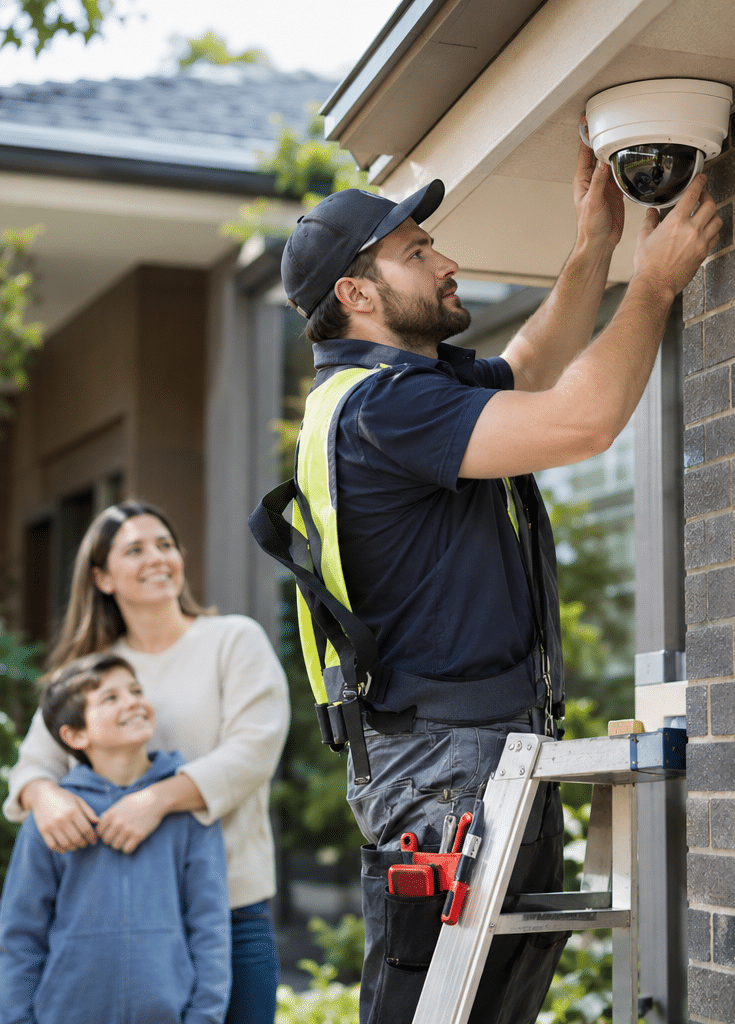
Once the design is approved, technicians install the cameras and related equipment.
They may run data cables, mount cameras, connect recording devices and configure the network.
After that, they set up recording schedules, image settings and authorised remote access.
Testing, training and maintenance
Finally, the installer should test the system.
This includes checking daytime and night-time footage, playback, motion alerts and camera connections.
Users should also learn how to find recordings, export video clips and report faults.
Professional CCTV installation services Melbourne businesses select should include a clear explanation of what support remains available after installation.
2. Why Melbourne Properties Benefit From Professional CCTV Systems
Melbourne includes many different property types, each with its own security requirements.
Consequently, a system that works well for one building may be unsuitable for another.
Better visibility around important areas
CCTV allows authorised users to observe selected parts of a property.
For example, a business manager may use cameras to review deliveries or check whether a restricted entrance is secure.
Similarly, a homeowner may want to see who approaches their front door when they are away.
However, cameras should support sensible security practices rather than replace them.
Good locks, lighting, access controls and alarms remain important.
Useful footage after incidents
Clear video footage may help establish the sequence of events following theft, property damage or an accident.
Nevertheless, the value of a recording depends on its quality.
A distant camera may show that someone entered a site without producing enough detail for identification.
Therefore, placement and image clarity often matter more than the total number of cameras.
Remote property monitoring
Modern CCTV systems can offer remote viewing through a phone, tablet or computer.
This can be useful for people who manage several properties or need to check a site outside normal operating hours.
However, remote viewing requires suitable network access and security controls. It should never depend on shared passwords or poorly protected internet connections.
Support for business operations
CCTV can also help businesses review events such as deliveries, vehicle movements and access to authorised work areas.
For example, a logistics operator may need to determine when a truck arrived at a loading bay.
Even so, businesses should define a legitimate purpose for each camera and avoid intrusive monitoring.
3. Planning CCTV Installation Services Melbourne Properties Actually Need
The most effective CCTV projects begin with clear goals.
Before requesting quotes, identify the events you want the system to capture.
Start with a security risk assessment
Walk through the property and consider its daily activities.
Ask where people enter, where expensive items are stored and which areas are difficult to supervise.
Then decide what each camera needs to achieve.
Three common objectives are:
Detection: See whether a person or vehicle is present.
Observation: Understand what someone is doing in a specific area.
Identification: Capture enough detail to help identify a person when conditions allow.
These objectives need different camera positions and levels of image detail.
For instance, a wide-angle camera may be excellent for watching a car park. Yet it may not capture a clear face at the far end.
As a result, one camera should not automatically be expected to perform every task.
Consider Melbourne's property layouts
Local building conditions can affect installation work.
Older homes may have limited access to wall cavities. Large warehouses may need long cable runs. Multi-storey offices may require coordination with building management.
Likewise, exposed outdoor cameras must cope with changing weather, strong sunlight and rain.
Equipment choices should reflect these conditions.
Use practical site examples
Consider a hypothetical small warehouse in Hallam.
The business wants to monitor deliveries, protect stored equipment and review unauthorised access.
A sensible plan might include cameras at the main vehicle gate, loading area, staff entrance and selected storage zones.
However, the exact number should follow a site survey.
Now consider a townhouse in Melbourne's eastern suburbs.
The owner may only need coverage of the front entrance, driveway and rear access area.
In this case, a smaller system with carefully chosen camera angles may be more useful than a large package with poorly positioned cameras.
4. Where Should CCTV Cameras Be Installed?
Camera placement is one of the most important parts of CCTV system design.
Even an expensive security camera can produce poor footage if it faces the wrong direction.
Entrances and exits
Start with the main entry and exit points.
These locations often provide opportunities to capture useful images as people approach or leave a property.
However, cameras should not be mounted so high that they only record the tops of people's heads.
Instead, installers should consider the viewing angle and expected distance from the subject.
Driveways and vehicle access
Driveways, parking areas and vehicle gates may also benefit from coverage.
A camera can help record vehicle movements and provide context around an incident.
Nevertheless, general vehicle footage should not be confused with reliable number plate recognition.
Accurate plate capture may require a dedicated camera, suitable lighting and specific placement.
Outdoor access points
Side passages, rear doors, storage yards and outdoor equipment areas are common locations to assess.
However, installers should consider privacy boundaries and avoid unnecessary coverage of neighbouring properties.
Lighting and image quality
Lighting can strongly affect recorded footage.
For example, strong sunlight behind a visitor may make their face appear dark.
Therefore, an installer may recommend a camera with wide dynamic range, often called WDR, to manage bright and dark areas in the same scene.
At night, infrared lighting or suitable low-light camera technology may help.
However, infrared light can reflect from nearby walls, windows or eaves and reduce image quality.
This is why a real night-time test is important.
Privacy-sensitive spaces
Cameras should not be positioned to capture private activities or unnecessarily intrude into neighbouring properties.
Toilets, changing rooms and similarly sensitive spaces require particular care.
Audio recording also raises separate issues and should not be enabled without checking the applicable requirements.
A professional should explain these concerns during site planning.
5. Choosing the Right Cameras for CCTV Installation Services Melbourne
Different CCTV cameras serve different purposes.
Therefore, buyers should compare more than megapixel ratings or advertised features.
Dome CCTV cameras
Dome cameras have a compact, rounded housing.
They are commonly used in offices, retail environments, corridors and other locations where a less prominent camera is preferred.
Depending on the model, they may also offer vandal-resistant construction.
However, not every dome camera has the same outdoor rating or durability.
Bullet CCTV cameras
Bullet cameras have a visible, directional body.
They are often suitable for entrances, building exteriors and outdoor areas where the intended viewing direction is clear.
Their appearance can also make the presence of CCTV obvious.
Nevertheless, the camera's lens and sensor determine how much detail it can capture.
Turret CCTV cameras
Turret cameras are another common option for homes and businesses.
Their adjustable design can make it easier to aim the lens.
In addition, some turret designs are less prone to certain infrared reflection problems than poorly installed dome cameras.
However, performance still depends on the selected model and installation.
PTZ cameras
PTZ stands for pan, tilt and zoom.
These cameras can change direction and zoom in on selected areas.
They may suit large yards, car parks and some industrial sites.
However, one moving camera cannot watch every direction at the same time.
For this reason, PTZ cameras often work best alongside fixed cameras that maintain continuous coverage.
Understanding camera resolution
Resolution describes how many pixels make up an image.
Common options include 1080p, 4MP, 6MP and 8MP cameras, although available specifications vary by manufacturer.
Higher resolution can capture more detail under suitable conditions.
However, it may also increase storage and network requirements.
Furthermore, image quality depends on the sensor, lens, compression and lighting.
A well-positioned 4MP camera can sometimes provide more useful footage of a doorway than a poorly positioned 8MP camera.
Outdoor protection ratings
Outdoor cameras should have appropriate protection against dust and moisture.
For example, IP66 and IP67 are common enclosure ratings. However, they describe different tested levels of environmental protection.
Likewise, IK ratings indicate resistance to mechanical impact.
Always check the manufacturer's specifications rather than assuming every outdoor camera offers the same protection.
6. Wired vs Wireless vs Cloud CCTV Installation Systems
Choosing the right technology affects reliability, cost and future maintenance.
The comparison below helps explain the main differences.
| CCTV system | Main advantages | Main limitations | Suitable applications |
| Wired IP cameras with PoE | Stable data connection; power and data through supported network cabling | Cabling can increase installation work | Homes, offices, shops and warehouses |
| Wi-Fi CCTV cameras | Flexible placement where suitable power and Wi-Fi exist | Signal strength and interference can affect performance | Smaller sites and selected indoor areas |
| Cloud-managed IP CCTV | Central management and remote access; storage options vary by product | May involve subscriptions, internet dependency or data-location concerns | Multi-site businesses and managed premises |
| Analogue or hybrid CCTV | May allow reuse of compatible existing cabling | Some older equipment has feature and image-quality limits | Upgrading existing installations |
Why PoE is a common professional choice
PoE means Power over Ethernet.
It allows supported cameras to receive power and data through an Ethernet cable connected to suitable network equipment.
This can reduce the need for separate power adaptors at each camera.
In addition, wired connections are less exposed to Wi-Fi signal problems.
However, the network and power equipment still need suitable protection.
When wireless cameras make sense
Wireless cameras can be useful when running data cables is difficult.
However, wireless does not always mean cable-free. Many cameras still require mains power.
Also, signal strength can change because of walls, metal structures and interference.
Therefore, a professional should test the connection before relying on wireless cameras for important coverage.
Choosing cloud recording
Cloud systems can make it easier to manage cameras across multiple locations.
However, cloud recording arrangements differ.
Some cameras store video in the cloud, some keep local copies, and others use both.
Before selecting a system, ask about subscription charges, storage location, upload bandwidth and access during an internet outage.
7. CCTV Installation Services Melbourne: Recording and Storage
Recording is just as important as capturing video.
A camera that displays a clear live image may still be of limited value if recordings are missing or difficult to retrieve.
What is an NVR?
NVR stands for Network Video Recorder.
An NVR receives video from compatible IP cameras and stores it on connected recording drives.
It may also provide playback, user permissions and remote viewing features.
For many sites, an NVR offers a practical way to keep recordings on the property.
However, a recorder should be protected from theft, damage and unauthorised access.
How much footage should be stored?
There is no single recording period suitable for every Melbourne property.
Storage needs depend on several factors:
- Number of cameras
- Video resolution and frame rate
- Recording hours and motion settings
- Video compression and bitrate
- Available storage space
- Business needs and applicable retention obligations
For example, continuous recording typically requires more storage than recording only when motion is detected.
However, motion-based systems may miss important events if their detection settings are unsuitable.
Therefore, the installer should calculate an expected storage period using the proposed camera settings.
Local storage or cloud storage?
Local storage can allow footage to remain available on-site without an active internet connection, provided the necessary equipment and power remain operational.
Cloud storage can provide off-site access and may reduce the impact of losing an on-site recorder.
However, upload speed, service costs and data security must be considered.
Some businesses may benefit from a hybrid approach.
For example, they may keep routine footage locally while storing selected critical clips off-site.
Why playback testing matters
After installation, request a playback demonstration.
Check whether the system can find a recording by date and time, export a usable clip and display images at normal speed.
Also, confirm the date and time settings are correct.
These simple steps may save significant effort when footage is required later.
8. CCTV Installation Services Melbourne: A 10-Step Installation Checklist
A structured process helps homeowners and businesses understand what happens before, during and after installation.
The following numbered checklist can also be used when comparing CCTV contractors.
Professional installation checklist
- Define the security objectives. Identify the areas to protect and the type of footage needed. Record any known incidents, access concerns or operational risks.
- Arrange a site assessment. Ask the installer to inspect the building, entrances, power sources and likely cable routes. Discuss how the property is used during business hours and after hours.
- Confirm the camera coverage plan. Review proposed camera positions on a drawing or site plan. Check important areas for blind spots and possible privacy concerns.
- Select the equipment. Compare camera types, lenses, recording devices and supported features. Choose equipment based on real needs rather than the largest advertised specification.
- Review the written quotation. Confirm the total scope, GST treatment, installation labour, storage, warranty, network configuration and any ongoing subscriptions.
- Check permissions and licensing. Verify the installer's relevant Victorian security licence. If the property is leased or part of an owners corporation, confirm the required approvals before work begins.
- Install cameras and cabling. Technicians mount the devices, run suitable cables and connect the recording equipment. Cable routes should be protected and accessible for future servicing where practical.
- Configure recording and access. Set the recording schedule, user accounts, passwords, alerts and remote-viewing permissions. Review the proposed retention period and any cloud settings.
- Test and commission the system. Inspect live and recorded footage during the day and at night. Test playback, exports, remote access and the behaviour of the system during relevant connection interruptions.
- Complete the handover. Obtain user instructions, warranty details, equipment information and support contacts. Confirm who maintains the system and how faults are reported.
This checklist makes CCTV installation services Melbourne buyers evaluate more transparent.
Importantly, commissioning should not be treated as a minor final task.
A system is not fully handed over simply because the cameras display live video.
9. How Much Do CCTV Installation Services Melbourne Cost?
The cost of CCTV installation varies significantly between properties.
There is no fixed price that accurately represents every Melbourne home or business.
Therefore, customers should compare quotations based on equipment and installation scope rather than camera count alone.
Main factors that affect installation costs
Number of cameras: More cameras usually increase equipment, cabling and labour requirements.
Camera specifications: Higher-quality sensors, specialist lenses and advanced low-light features can increase the price.
Property layout: Multi-storey buildings, long cable routes and difficult mounting locations may require extra work.
Recording requirements: Larger storage drives, additional recording channels and backup arrangements affect system costs.
Network equipment: Some projects need new PoE switches, network upgrades or a secure equipment cabinet.
Software and cloud services: Certain products involve recurring licensing or storage fees.
Maintenance: Service agreements and future upgrades should be considered as part of the overall budget.
What is a realistic installation budget?
For initial planning, a straightforward four-camera home installation may fall within the low thousands of Australian dollars.
However, this is only a broad, illustrative budget allowance. It is not a fixed Melbourne market average or a quotation from Eclipse Security.
Larger commercial systems can cost substantially more, especially when they require specialist cameras, complex cabling or integration with existing security infrastructure.
For this reason, a site-specific quote is more useful than a generic advertised package.
What should an installation quote include?
A clear quote should identify the camera models, number of units, recorder specifications and proposed storage.
It should also explain the installation work, system setup, warranty, support and any exclusions.
Furthermore, ask whether the stated price includes GST.
A low initial quote may become less attractive if extra cabling, mobile access, recording storage or installation materials are charged separately.
Therefore, compare the total installed cost over the expected life of the system.
10. Victorian Licensing, Privacy and CCTV Compliance
Before selecting CCTV installation services Melbourne customers should understand the importance of contractor licensing and responsible surveillance.
These matters are relevant to both the installation process and the ongoing use of recorded footage.
Security installer licensing in Victoria
Victoria regulates professional security equipment installation.
According to Victoria Police guidance on private security licensing, changes effective from 19 June 2025 made all private security activities licensed activities, including security equipment installation.
Victoria Police also explains that property owners do not need a private security licence to install their own home security system. However, anyone assisting with the installation must be appropriately licensed.
As a result, customers hiring a professional should verify that the individual and business hold the appropriate authority for the work being performed.
The Victoria Police public register can be searched by name or licence number.
Also, remember that a general trade qualification does not automatically establish authority to carry out regulated security installation activities.
Surveillance and privacy considerations
CCTV can capture images of identifiable people.
Therefore, users should consider why footage is collected, who can access it and how long it will be retained.
The Office of the Victorian Information Commissioner provides privacy guidance for Victorian public sector employers using workplace surveillance.
Its guidance stresses legitimate purposes, proportionate surveillance and clear information for affected employees.
Although that guidance specifically addresses Victorian public sector obligations, these are useful planning principles for other organisations. The legal duties of private businesses can differ.
Depending on the circumstances, relevant legislation may include Victoria's Surveillance Devices Act 1999 and applicable Commonwealth privacy laws.
Practical administrative steps
Before operating workplace CCTV, a business should consider:
- Documenting the purpose of each camera
- Reviewing camera views for unnecessary intrusion
- Deciding whether signage or notices are required
- Restricting access to authorised people
- Establishing a suitable footage retention policy
- Keeping records of access and footage disclosures
- Checking permissions for leased or shared premises
These are general administrative safeguards, not legal advice.
For complex installations, workplace monitoring or audio recording, seek advice from an appropriately qualified professional.
What about residential privacy?
Homeowners should also consider neighbouring properties.
For example, a camera pointed towards a shared boundary may capture more than is necessary to protect the home.
Where practical, adjust the viewing angle or use supported privacy masking features.
Additionally, owners corporation rules or tenancy conditions may affect the ability to mount cameras in shared spaces.
11. Cyber Security for CCTV Installation Services Melbourne
A modern CCTV system is often part of a computer network.
Therefore, physical security and cyber security must be considered together.
An insecure camera or recorder can expose video footage and connected systems to unauthorised access.
Use strong account security
Start by replacing default credentials where necessary and supported.
Each user should have an individual account with access appropriate to their responsibilities.
For example, an employee who only needs to view one entrance should not automatically receive administrator privileges over every camera.
Where available, enable multi-factor authentication for remote and cloud accounts.
Keep firmware updated
CCTV devices run software, commonly called firmware.
Manufacturers may release updates to address security issues, improve stability or correct faults.
Therefore, the system owner should know who is responsible for applying updates.
The Australian Cyber Security Centre's guidance on securing connected devices recommends strong passwords, software updates, secure connections and checking the security support offered by manufacturers.
Its October 2026 guidance also discusses Australia's smart-device security rules that commenced on 4 March 2026.
However, buyers should check whether specific rules apply to the equipment they intend to purchase rather than assuming every professional CCTV product has identical obligations.
Protect the CCTV network
Business installations may benefit from separating camera traffic from other network services.
This is sometimes called network segmentation.
It can help limit access between CCTV devices and unrelated business systems.
Also, avoid exposing recorder management ports directly to the public internet when safer access methods are available.
Secure vendor-supported remote connections or properly configured VPN access may be more appropriate.
Protect stored footage
Recording equipment should be kept in a secure location.
Additionally, businesses should control exports, remove access for former staff and review account permissions regularly.
When equipment is replaced, old drives and cloud accounts should be handled carefully.
This helps reduce the risk of confidential footage being exposed.
12. Commercial CCTV Installation Services Melbourne Businesses Need
Commercial properties often need more detailed CCTV planning than a typical residence.
They may contain several entrances, restricted spaces, high-value stock or large outdoor areas.
Furthermore, different staff members may need different levels of system access.
Retail shops and shopping facilities
Retail CCTV may cover entrances, payment areas, selected sales floors and stock access points.
However, cameras should be positioned for legitimate security needs rather than intrusive observation.
For example, a camera at a shop entrance can help show who entered during an incident.
A second camera may provide a wider view of what happened within the store.
Together, the cameras may offer better context than one wide-angle device.
Warehouses and industrial sites
Warehouses in areas such as Dandenong South, Truganina and Campbellfield often have large floor areas and loading operations.
Potential CCTV priorities include vehicle access, goods receiving, loading docks and high-value storage.
However, a large building may require several types of cameras.
Wide-view cameras can monitor general movement, while more focused cameras can capture detail at important access points.
Offices and corporate premises
Office CCTV commonly focuses on entry points, reception areas and restricted access locations.
It may also work with electronic access control.
Nevertheless, businesses should distinguish between security monitoring and employee performance monitoring, as their purposes and obligations may differ.
Schools and community facilities
Educational and community premises can have complex privacy, access and safeguarding needs.
Therefore, camera placement should follow a documented risk assessment and appropriate governance approval.
In many cases, entrance and perimeter coverage will be more appropriate than unnecessary surveillance of private spaces.
Multi-site operations
Businesses with several Melbourne locations may benefit from centralised camera management.
For example, authorised managers may want to review footage across several stores without travelling to each property.
However, centralised systems should include clear permissions, secure accounts and documented data handling practices.
13. Integrating CCTV With Other Security Systems
CCTV is often more useful when it operates alongside other security measures.
For example, cameras can complement alarms, intercoms and electronic access control.
CCTV and access control
Access control systems manage who can enter a particular area.
They may use cards, fobs, mobile credentials or other supported methods.
When integrated with CCTV, an access event may be associated with relevant video footage.
For example, if an authorised door opens outside normal hours, an operator may be able to review footage from that entrance.
However, integration capabilities depend on the products and software involved.
CCTV and alarm systems
An alarm can indicate that a sensor has detected an event.
CCTV may then help an authorised user assess what happened.
For example, an intrusion alert could prompt a review of the camera near the affected entrance.
However, neither system guarantees that an incident will be prevented.
CCTV and intercom systems
Video intercoms can help users communicate with visitors and manage entry.
This may be useful for offices, apartment entrances and controlled delivery points.
When planning CCTV installation services Melbourne businesses may benefit from reviewing these systems together.
An integrated design can reduce duplicated equipment and improve ease of use where supported.
Choosing the right level of integration
Not every property needs a complex security platform.
For a small home, basic cameras and a suitable alarm may be enough.
Meanwhile, a larger commercial site may require central management across several security technologies.
Therefore, the system should match the site's actual operational needs.
14. CCTV Maintenance and Long-Term Performance
A CCTV system requires attention after installation.
Over time, camera lenses may become dirty, network equipment may develop faults and recording drives may need replacement.
Therefore, ongoing maintenance is an important part of reliable surveillance.
Regular checks
Property owners should periodically inspect live footage and confirm that recording is working.
In addition, check whether the date and time remain correct.
For outdoor cameras, look for dirt, damage, blocked views and changes in nearby lighting.
A growing tree or newly installed sign may obstruct a camera that previously had a clear view.
Recording and storage checks
Review available recording history and confirm that the system retains footage for the intended period.
Also, test whether important clips can still be exported.
These checks are especially useful after firmware updates or equipment changes.
Professional servicing
For commercial sites, a maintenance agreement may provide scheduled inspections and fault support.
The frequency should depend on the system's importance, operating environment and manufacturer recommendations.
For example, a heavily used industrial system may need more frequent attention than a small residential installation.
Planning for upgrades
Security needs change over time.
A business may expand into another building or add a new loading area.
Therefore, selecting recording equipment with suitable spare capacity can reduce future replacement costs.
However, spare capacity should be planned realistically rather than purchased without a clear purpose.
15. Common Mistakes When Choosing CCTV Installation Services Melbourne
Some CCTV problems start before the equipment is installed.
Understanding common mistakes can help prevent avoidable expenses.
Buying cameras based only on price
A low-cost package may appear attractive.
However, it may use unsuitable lenses, limited storage or equipment with poor ongoing support.
Instead, compare image quality, functionality, warranty and installation scope.
Ignoring night-time performance
A camera that looks excellent in daylight may struggle at night.
Therefore, request examples or tests under lighting conditions similar to the actual site.
Also, check whether nearby lights cause glare or reflections.
Installing cameras too high
High mounting positions can provide wide coverage.
However, they may reduce the facial detail available in recorded footage.
The right height depends on the camera's purpose and physical security requirements.
Forgetting about storage
Insufficient storage can cause older footage to be overwritten sooner than expected.
Therefore, confirm the expected recording period before installation.
Using weak passwords
Remote viewing can be convenient.
However, weak account security may expose private footage.
For this reason, secure setup should be part of system commissioning.
Not checking the installer
An attractive quotation is not a substitute for appropriate licensing, experience and support.
Consequently, confirm the contractor's credentials and request a written scope before approving installation.
16. People Also Ask: CCTV Installation Services Melbourne
How much does CCTV installation cost in Melbourne?
Costs vary with the number of cameras, equipment quality, cable routes and recording requirements. A small residential system may cost a few thousand Australian dollars, but commercial projects can be substantially more expensive. A written site-specific quote provides a more reliable budget.
Do CCTV installers need a licence in Victoria?
Professional security equipment installation is a regulated private security activity in Victoria. Customers should check that the installer and relevant business hold the appropriate licences for the work, while homeowners installing their own systems have a specific exemption.
What is the best CCTV camera system for a Melbourne home?
A suitable system generally provides clear views of entrances and other priority areas, reliable recording and secure remote access. Wired IP cameras with an NVR are worth considering, although the best choice depends on the property layout and budget.
Can CCTV cameras record clearly at night?
Yes, suitable cameras can capture useful night-time footage using infrared or low-light technology. However, results depend on lighting, distance, lens selection and installation, so night-time testing is essential.
How long does professional CCTV installation take?
A straightforward home installation may be completed within a day, depending on access and complexity. Larger commercial projects may require several days or more for cabling, configuration, integration and testing. The installer should confirm the expected schedule after assessing the site.
17. Frequently Asked Questions About CCTV Installation Services Melbourne
1. How many days of CCTV footage should a Melbourne business retain?
There is no single retention period suitable for every business.
The appropriate period depends on security needs, storage capacity, contractual requirements and applicable privacy or industry obligations.
For example, a business may need enough time to identify an incident that is not discovered immediately.
However, keeping recordings indefinitely can create unnecessary privacy and storage risks.
Therefore, the business should establish a documented retention policy, review applicable requirements and size the recording system accordingly.
2. Can an existing CCTV system be upgraded without replacing all the cabling?
Sometimes, yes.
The options depend on the existing cable type, its condition and the compatibility of the new equipment.
For example, some analogue CCTV systems may support upgrades using compatible recording hardware and cameras.
In other cases, network adapters or new cabling may be required.
However, reusing damaged or unsuitable cables can create reliability problems.
A professional inspection should determine whether keeping the existing infrastructure is practical and cost-effective.
3. What happens to CCTV recordings during a power outage?
A system normally stops recording if essential cameras, switches or recorders lose power.
However, an appropriately designed uninterruptible power supply, known as a UPS, may keep selected equipment operating for a limited period.
The available backup time depends on the connected load and battery capacity.
Therefore, businesses should identify which cameras and recording components require backup power.
A UPS is useful for short interruptions, but it should not be treated as unlimited emergency power.
4. Can CCTV footage be provided to police or an insurance company?
Footage may be relevant to police investigations or insurance claims, depending on the incident and applicable rules.
However, the system owner should follow appropriate procedures before sharing recordings.
Useful practices include retaining the original file, recording the date and time, documenting who received a copy and avoiding unnecessary edits.
Also, keep access restricted to authorised people.
Importantly, the existence of CCTV footage does not guarantee that a claim will be accepted or an offender identified.
5. How can a business check whether its CCTV system is performing properly?
Start by checking that every required camera is online and recording.
Next, review recent playback rather than relying only on live video.
Then inspect picture quality, camera angles, storage history and recorded timestamps.
Also, test remote access, user permissions and the export process.
For higher-risk sites, schedule these checks as part of a formal maintenance plan.
A useful performance measure is whether the system can provide the footage needed for its original security purpose.
Conclusion: Choosing CCTV Installation Services Melbourne Property Owners Can Trust
Choosing the right CCTV installation services Melbourne is about creating a security system that meets real needs.
A successful installation starts with a site assessment, clear security objectives and carefully planned camera positions. It also requires suitable recording capacity, safe network access, responsible privacy practices and ongoing maintenance.
For homeowners, the priority may be simple and reliable coverage of entrances and outdoor areas. For businesses, the requirements may extend to multiple buildings, access control, alarms and centralised monitoring.
However, more cameras do not automatically mean better security. Clear footage, practical coverage and a well-managed system are usually more important than unnecessary features.
Before approving a project, compare equipment specifications, confirm the contractor's licensing and request a detailed installation quote.
Eclipse Security Systems provides CCTV camera systems, installation, maintenance and integrated security solutions for Melbourne homes and commercial properties. Its services include options for CCTV, access control, alarms and monitoring.
Ready to improve your property's security?
Explore professional CCTV installation and security assessment services from Eclipse Security Systems to discuss your property's requirements, compare suitable options and request a tailored assessment.