


CCTV camera installers help Australian homeowners, business owners, strata managers, and site operators choose, position, install, connect, and maintain security camera systems. From my experience reviewing security setups, the best results usually come from matching the camera system to the site’s real risks, not simply buying the highest-resolution cameras.
A good installer looks at entrances, lighting, blind spots, internet access, recording needs, privacy concerns, and ongoing support. As a result, you get clearer footage, fewer false alerts, safer cabling, and a system that is easier to use when something happens.
Table of Contents
- What CCTV camera installers do
- Why professional installation matters
- CCTV camera installers: featured definition
- Common CCTV systems in Australia
- How to choose the right installer
- Residential vs commercial CCTV installation
- CCTV placement and privacy in Australia
- Cyber security for modern IP cameras
- CCTV installation checklist
- Comparison table: DIY vs professional installers
- Costs and quote factors
- People Also Ask
- Expert Q&A
- Conclusion
CCTV Camera Installers
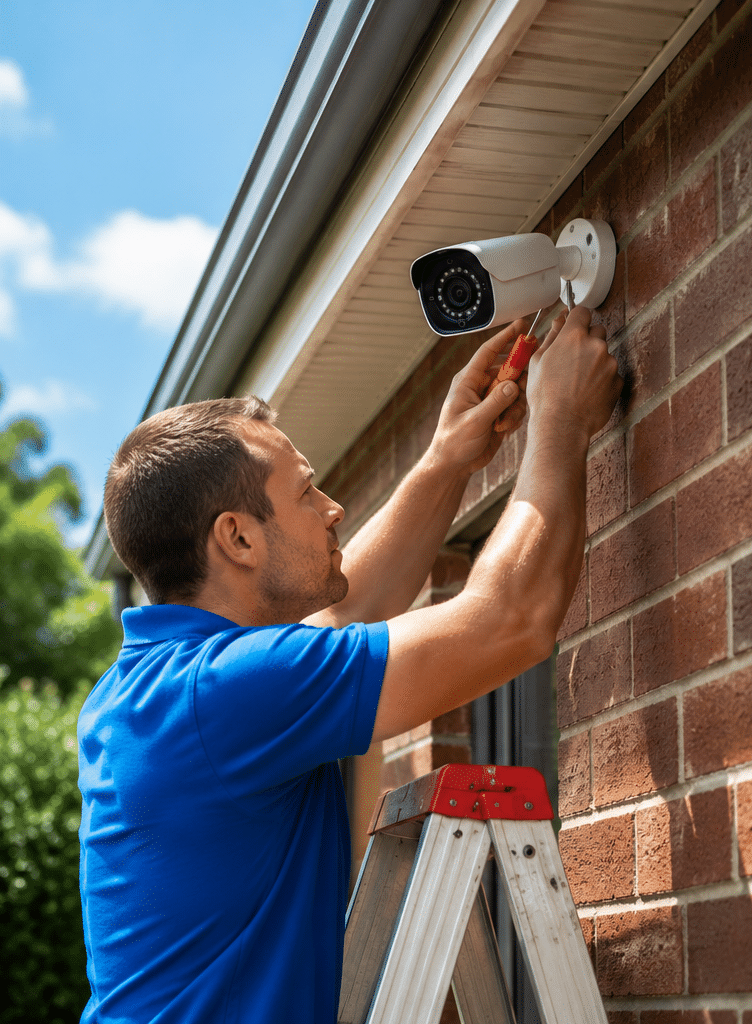
CCTV camera installers are security professionals who plan, mount, connect, configure, and test camera systems for homes, shops, offices, warehouses, and other properties. In Australia, quality installers consider camera coverage, privacy, cabling, recording, remote access, cyber security, and support so the system works reliably after installation.
What Do CCTV Camera Installers Actually Do?
CCTV camera installers do more than attach cameras to walls. A proper installation usually starts with a site assessment. The installer checks entry points, side paths, driveways, cash-handling areas, loading docks, reception areas, dark corners, and network access.
Then, they recommend suitable camera types. For example, a home may need turret cameras near entrances, while a warehouse may need varifocal cameras, wide-angle coverage, or higher mounting points. In addition, some businesses need number plate capture, after-hours monitoring, or integration with alarms and access control.
A complete CCTV installation may include:
- Camera selection and placement
- NVR or DVR setup
- Data cabling or wireless configuration
- Power supply planning
- Mobile app setup
- Motion detection settings
- Recording retention settings
- User access permissions
- Signage and privacy guidance
- Testing, handover, and basic training
Because modern systems are often internet-connected, cyber security also matters. The Australian Cyber Security Centre notes that IoT devices can include security cameras and that many connected devices have not always been designed with strong security in mind.
Why Professional CCTV Camera Installers Matter
Many camera problems are not caused by bad cameras. Instead, they come from poor placement, weak passwords, low-quality cabling, glare, blocked views, poor night vision planning, or storage settings that overwrite footage too soon.
From my experience, the most common installation mistakes are placing cameras too high, pointing them into bright light, relying only on Wi-Fi in weak-signal areas, and failing to test footage at night. These issues may not be obvious on installation day, but they become serious when you need clear evidence.
Professional CCTV camera installers help reduce those risks. They understand field of view, camera angle, lens choice, mounting height, infrared reflection, cable routes, and recorder setup. Therefore, the final system is more likely to capture useful footage rather than just general movement.
For businesses, professional installation is even more important. Retail stores, warehouses, medical clinics, offices, cafés, childcare sites, construction sites, and strata properties often need a balance between security, staff comfort, customer privacy, and operational use.
Common CCTV Systems Used in Australia
Australian homes and businesses commonly use four main CCTV system types.
1. IP CCTV Systems
IP systems use network cameras connected through Ethernet or Wi-Fi. Many professional systems use Power over Ethernet, often called PoE, which sends power and data through one cable. This can make installation cleaner and more reliable.
IP CCTV is popular because it supports high-resolution footage, remote access, smart alerts, and flexible recording. However, because these systems connect to networks, installers should secure passwords, firmware, router settings, and user access.
2. Analogue HD CCTV Systems
Analogue HD systems use coaxial cabling and are often found in older buildings. They can still provide useful footage, especially where existing cable routes are already in place.
However, many new installations now favour IP systems because they are easier to expand and integrate with modern software. Still, an experienced installer can advise whether upgrading the whole system is necessary or whether existing cabling can be reused.
3. Wireless CCTV Systems
Wireless systems are common in homes and small businesses. They can be convenient where cabling is difficult. However, “wireless” does not always mean wire-free. Many cameras still need power.
Also, wireless systems depend on signal strength, router quality, and network stability. Therefore, CCTV camera installers should test Wi-Fi coverage before recommending wireless cameras for critical locations.
4. Cloud-Connected Security Cameras
Cloud-connected systems store footage online or support app-based access. They are convenient, but they may involve subscription fees, privacy settings, and data security considerations.
Before choosing cloud storage, ask where footage is stored, who can access it, how long it is retained, and what happens if the internet goes down.
How to Choose CCTV Camera Installers in Australia
Choosing CCTV camera installers should not be based on price alone. A low quote may leave out cabling, recorder capacity, after-hours support, app setup, or proper handover.
Instead, compare installers on scope, experience, product quality, licensing where relevant, warranty, and support.
Check Experience With Similar Properties
A residential installer may be excellent for homes but less suitable for a multi-site commercial rollout. Likewise, a commercial security provider may be better for warehouses, retail chains, office buildings, strata sites, and construction projects.
Ask whether the installer has worked on similar sites. For example:
- Single-storey homes
- Townhouses and strata buildings
- Retail shops
- Restaurants and cafés
- Warehouses
- Medical clinics
- Schools or childcare settings
- Construction sites
- Farms and rural properties
This matters because each property has different risks. A rural property may need long-range night vision and reliable remote access. A shop may need face-level entry coverage and point-of-sale visibility. A warehouse may need wide-area coverage and vehicle movement monitoring.
Ask About Licensing and Electrical Work
Licensing rules can vary by state and territory, and electrical work should be handled by appropriately licensed people. In New South Wales, Service NSW provides an online way to check a security operative licence, which is useful for customers who want to verify credentials.
This article is general information, not legal advice. For compliance questions, treat licensing checks, signage, privacy notices, and workplace surveillance processes as administrative tasks that should be reviewed against your state or territory requirements.
Review the Quote Carefully
A strong CCTV quote should clearly explain:
- Number of cameras
- Camera model and resolution
- Recorder type and storage size
- Cable type and installation method
- Power supply method
- Remote viewing setup
- Warranty terms
- Labour inclusions
- Exclusions
- Support after installation
If the quote only says “install CCTV system” without detail, ask for a clearer scope. Otherwise, it is hard to compare installers fairly.
Residential CCTV Camera Installers
Residential CCTV camera installers usually focus on entry points, driveways, side gates, garages, sheds, and backyards. The goal is often deterrence, safety, and evidence if a theft, trespass, or damage event occurs.
For homes, useful camera positions often include:
- Front door
- Driveway
- Garage or carport
- Side access path
- Rear sliding door
- Backyard entry
- Shed or detached garage
However, privacy still matters. The Office of the Australian Information Commissioner explains that the Privacy Act generally does not cover a security camera operated by an individual acting in a private capacity, but state or territory laws may still apply.
Therefore, homeowners should avoid pointing cameras unnecessarily into neighbours’ windows, private yards, bathrooms, or other sensitive areas. A thoughtful installer can adjust lens angle, privacy masking, and camera position to focus on your property.
Commercial CCTV Camera Installers
Commercial CCTV camera installers usually need to consider safety, loss prevention, staff procedures, customer areas, access points, and incident response. In addition, they may need to coordinate with IT teams, building managers, insurers, and operations staff.
Common commercial CCTV areas include:
- Entrances and exits
- Reception desks
- Cash registers
- Stockrooms
- Loading docks
- Car parks
- Server rooms
- Warehouses
- Perimeter fencing
- Shared corridors
Commercial CCTV should be planned with clear internal rules. For example, decide who can view footage, how footage is exported, how long recordings are kept, and when police or insurers may receive footage.
The OAIC provides privacy guidance about security cameras and surveillance, including practical information about residential and organisational use. For more detail, see the OAIC security camera guidance.
CCTV Placement: The Difference Between Footage and Useful Evidence
Camera placement is one of the biggest differences between a basic installation and a useful system.
For example, a camera mounted very high may show that someone entered a site, but it may not capture a clear face. On the other hand, a camera at a lower entry angle may capture better identification footage. However, it must still be protected from tampering.
Good CCTV camera installers consider:
- Facial capture height
- Vehicle direction
- Lighting changes
- Sun glare
- Night vision range
- Reflections from walls or glass
- Weather exposure
- Vandal resistance
- Cable concealment
- Wi-Fi signal strength
- Privacy zones
As a result, they design coverage around real scenarios. For example, a front driveway camera may need to capture both vehicles and people approaching the front door. A shop entrance camera may need to handle strong daylight from outside and lower indoor lighting.
Privacy and CCTV in Australia
CCTV privacy in Australia depends on the setting, the type of organisation, and state or territory rules. For businesses, identifiable video footage can be personal information in some situations. Therefore, signage, collection notices, access controls, and storage policies may matter.
This is not legal advice. However, as a practical starting point, businesses should consider:
- Why cameras are needed
- Where cameras are installed
- Whether staff and visitors are notified
- Who can access footage
- How long footage is kept
- Whether audio is disabled unless clearly justified
- Whether cameras avoid private areas
Audio recording deserves extra caution. Many CCTV cameras include microphones, but audio surveillance can be more sensitive than video. Therefore, many businesses disable audio unless they have received appropriate advice.
Cyber Security for CCTV Camera Installers
Modern CCTV systems are often connected to mobile apps, routers, cloud platforms, and business networks. Therefore, CCTV camera installers should understand basic cyber security.
The Australian Signals Directorate says its Australian Cyber Security Centre leads the Australian Government’s cyber security efforts and works to improve cyber resilience across the community. For connected devices, the ACSC also provides guidance on securing Internet of Things devices, including examples such as security cameras.
For more practical guidance, review the Australian Cyber Security Centre advice on IoT devices.
A good installer should help with:
- Changing default passwords
- Setting strong admin credentials
- Updating firmware where appropriate
- Disabling unused services
- Setting user permissions
- Avoiding unnecessary public exposure
- Configuring remote access securely
- Separating CCTV from sensitive networks where needed
- Documenting login details safely for the owner
This matters because a camera system is not just a recording tool. It is also a connected device environment. Poor setup can create privacy, security, and operational risks.
Numbered Checklist: How to Work With CCTV Camera Installers
Use this checklist before you approve a CCTV installation.
- Define your goal
Decide whether you need deterrence, identification, safety monitoring, stock protection, vehicle capture, or after-hours alerts. - List key areas
Write down the areas you need covered, such as doors, driveways, loading zones, car parks, or reception areas. - Check lighting conditions
Ask the installer to consider daytime glare, night lighting, shadows, and infrared performance. - Ask for camera positions
Request a simple plan showing where each camera will go and what it should capture. - Confirm recording time
Ask how many days of footage the system is expected to store. Treat this as an estimate because motion, resolution, and frame rate affect storage. - Review privacy issues
Make sure cameras avoid private areas and unnecessary neighbouring property views. - Check remote access security
Confirm that default passwords will be changed and user access will be restricted. - Ask about warranty and support
Clarify who handles faults, app issues, camera failures, and recorder problems. - Request handover training
Make sure you know how to view footage, export clips, use the app, and manage alerts. - Keep documentation
Store the quote, warranty, camera layout, passwords, and support contact details securely.
DIY vs Professional CCTV Camera Installers
| Factor | DIY CCTV Setup | Professional CCTV Camera Installers |
| Upfront cost | Usually lower | Usually higher |
| Camera placement | Based on user judgement | Based on site assessment |
| Cabling quality | Can be exposed or inconsistent | Usually cleaner and safer |
| Network security | Often basic | Should include stronger setup |
| Troubleshooting | User handles issues | Installer may provide support |
| Evidence quality | Can vary widely | More likely to be useful |
| Best for | Simple homes or temporary needs | Homes, businesses, strata, and critical sites |
DIY can suit simple needs. However, professional CCTV camera installers are usually better when footage quality, reliability, neat cabling, and long-term support matter.
How Much Do CCTV Camera Installers Cost?
CCTV installation costs in Australia vary because every site is different. A small home system with a few cameras is very different from a warehouse, strata building, or multi-site commercial setup.
The quote may depend on:
- Number of cameras
- Camera resolution
- Night vision requirements
- Cable length
- Roof or wall access
- Single-storey or multi-storey layout
- Recorder storage size
- Remote access setup
- Switches, routers, or network upgrades
- Labour time
- Travel
- Warranty and support
Because prices change by region and scope, treat any online price as an estimate only. The best approach is to request a site-specific quote.
CCTV Camera Installers for Homes vs Businesses
Home CCTV often focuses on simple access points and app alerts. Business CCTV often needs a more structured design.
For homes, priorities usually include:
- Easy mobile viewing
- Clear entry footage
- Night vision
- Simple playback
- Minimal visual impact
For businesses, priorities often include:
- Staff and customer safety
- Incident review
- Stock protection
- Multi-user access
- Longer retention
- Better export process
- Integration with alarms or access control
Therefore, commercial buyers should ask more detailed questions about user permissions, retention, network design, signage, and support.
Questions to Ask Before Hiring CCTV Camera Installers
Before choosing an installer, ask:
- Have you installed systems for similar properties?
- What camera models are included?
- Why do you recommend those camera locations?
- How many days of recording should I expect?
- Will the system work during internet outages?
- How will remote access be secured?
- Will you disable default passwords?
- Is audio recording disabled?
- What warranty is included?
- What support is available after handover?
These questions quickly separate careful CCTV camera installers from basic fit-and-finish operators.
People Also Ask: CCTV Camera Installers in Australia
Do CCTV camera installers need a licence in Australia?
Requirements can vary by state, territory, and work type. Security work, electrical work, and cabling may have different requirements, so customers should ask installers what licences or registrations apply to the job.
How many CCTV cameras do I need for my home?
Most homes start with cameras at the front entry, driveway, side access, and rear entry. However, the right number depends on layout, lighting, blind spots, and whether you need identification or general monitoring.
Are wired CCTV cameras better than wireless cameras?
Wired CCTV is usually more stable because it does not depend on Wi-Fi signal strength. However, wireless cameras can suit smaller homes or areas where cabling is difficult.
Can CCTV camera installers set up phone viewing?
Yes, most modern installers can configure mobile app viewing. However, they should also secure the login, change default passwords, and explain how to manage users safely.
Where should CCTV cameras not be installed?
Avoid bathrooms, change rooms, private bedrooms, and areas where surveillance is unnecessary or intrusive. Also avoid pointing cameras into neighbouring private spaces where possible.
Expert Q&A About CCTV Camera Installers
1. What makes a CCTV installer good?
A good CCTV installer explains the reason behind every camera position. They do not just install a package. Instead, they assess risks, lighting, access points, storage needs, privacy, and network security.
2. Should I choose 4K CCTV cameras?
4K cameras can provide more detail, but they also need more storage and stronger network planning. In some cases, camera position, lens choice, and lighting matter more than resolution alone.
3. How long should CCTV footage be stored?
Storage time depends on the site, risk level, recorder size, resolution, frame rate, and motion settings. Many homes need less retention than businesses, but the right period should be chosen based on how quickly incidents are usually discovered.
4. Can CCTV cameras work without the internet?
Yes, many wired CCTV systems can keep recording locally to an NVR even if the internet drops out. However, remote phone viewing and cloud alerts usually need internet access.
5. Should businesses display CCTV signs?
In many business settings, signage is a sensible administrative step because it supports transparency. Businesses should also consider privacy notices, staff communication, footage access rules, and state or territory requirements.
Conclusion
CCTV camera installers play an important role in building a reliable security system. The right installer helps you choose suitable cameras, place them correctly, secure remote access, reduce blind spots, and understand basic privacy responsibilities.
For Australian homes and businesses, the best CCTV system is not always the most expensive one. Instead, it is the system that captures useful footage, works reliably, is easy to manage, and fits the property’s real risks.
For practical help with camera selection, installation planning, and security system setup, contact trusted CCTV and security camera specialists in Australia.