


Back to base alarm monitoring is a smart option for Australians who want their alarm system connected to a professional monitoring centre rather than relying only on a siren, phone notification, or neighbour response. From my experience working with security content and reviewing how monitored systems are explained to everyday users, the biggest value is not just the alarm itself. It is the organised response process behind it.
A loud siren may scare off some intruders. However, if nobody hears it, checks it, or acts on it, the system may not deliver the protection you expected. This is where back to base alarm monitoring becomes useful. It connects your security system to a control room that can receive signals, verify events, contact authorised people, and escalate response based on the agreed procedure.
In Australia, monitored security needs to be understood in a practical way. Standards, monitoring centre grading, police response rules, user instructions, and site-specific response plans all matter. For example, ASIAL notes that Australian electronic security standards include alarm systems, monitoring centres, CCTV and cabling requirements, including AS 2201.2:2022 for monitoring centres. You can review this through ASIAL’s electronic security standards overview.
This guide explains what back to base alarm monitoring means, how it works, what to ask before choosing a provider, and how Australian homes and businesses can make better decisions without getting lost in technical language.
Table of Contents
- What Is Back to Base Alarm Monitoring?
- Why Back to Base Alarm Monitoring Matters in Australia
- How Back to Base Alarm Monitoring Works
- What Signals Can Be Monitored?
- Back to Base Alarm Monitoring vs Self-Monitoring
- Onshore vs Offshore Alarm Monitoring
- Australian Standards, Police Response and Admin Considerations
- Who Should Consider Back to Base Alarm Monitoring?
- What to Check Before Choosing a Provider
- Numbered Checklist: How to Set Up Monitoring Properly
- Common Mistakes to Avoid
- People Also Ask
- Expert Q&A Section
- Conclusion
What Is Back to Base Alarm Monitoring?
Back to base alarm monitoring means your alarm system sends signals to a professional monitoring centre when an event occurs. Trained operators review the signal, follow your response plan, contact nominated people, and arrange escalation where appropriate, instead of leaving the alarm to rely only on a siren or app alert.
Why Back to Base Alarm Monitoring Matters in Australia
Australia has a wide mix of homes, retail stores, warehouses, offices, schools, medical centres, hospitality venues and industrial sites. As a result, the right alarm response can vary a lot from one property to another.
For a small home, the concern may be a break-in while the family is away. For a warehouse, it may be after-hours access, staff safety, power failure, or unauthorised entry through a roller door. For a retail store, it may be duress, hold-up alerts, late closing, or a forced entry alarm after midnight.
Back to base alarm monitoring helps because it creates a response process. Instead of only making noise, the system communicates with a monitoring centre. Then, the operator can follow agreed instructions.
This matters because most people are not available every minute of the day. Phones go flat. People sleep. Business owners travel. Staff change shifts. Internet outages happen. Also, self-monitored app alerts can be missed when the user is driving, in a meeting, or overseas.
From my experience, the most overlooked part of alarm monitoring is the response plan. Many people focus on the keypad, sensors and monthly cost. However, the real value is in what happens after an alarm signal is received.
A good setup should answer these questions clearly:
Who gets called first?
What happens if they do not answer?
When should a patrol be sent?
Are there separate instructions for duress, burglary, fire, medical, low battery or power fail signals?
Are there different rules for business hours and after hours?
How are false alarms reduced?
Therefore, back to base alarm monitoring is not just a product. It is a managed process.
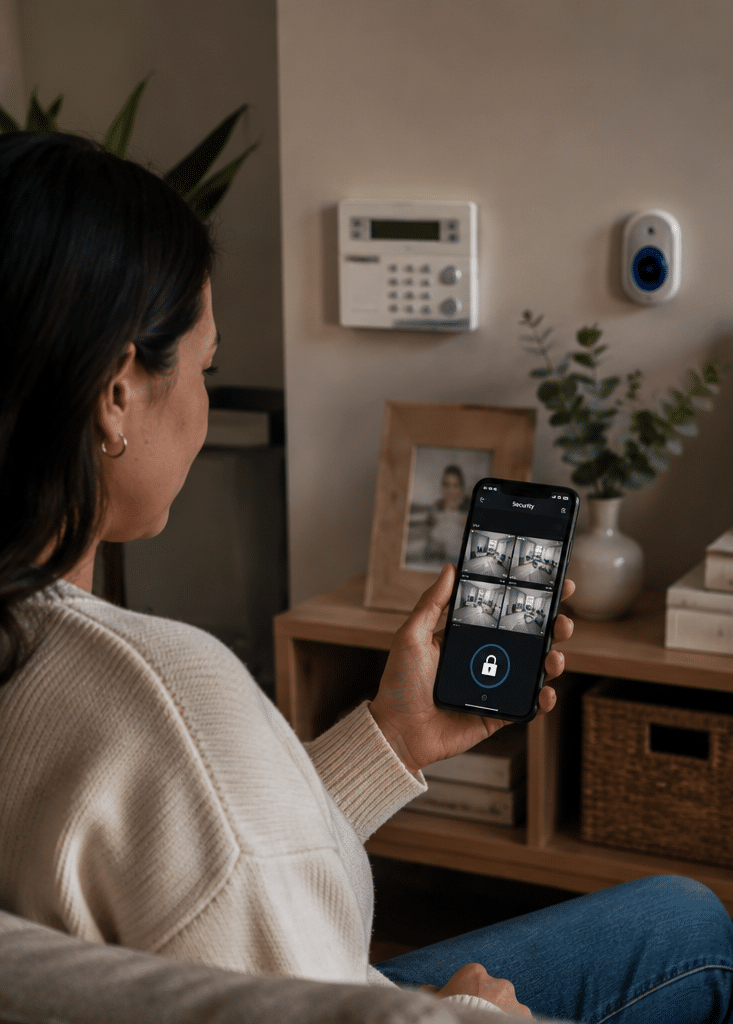
How Back to Base Alarm Monitoring Works
Back to base alarm monitoring usually follows a simple chain of events. Although the technology can vary, the process is easy to understand.
First, an alarm device detects an event. This could be a motion detector, reed switch, glass break sensor, panic button, smoke-related device, duress button, tamper switch, or another input connected to the alarm panel.
Next, the alarm panel sends a signal to the monitoring centre. Depending on the system, that signal may travel through internet, mobile network, IP communicator, 4G pathway, or another approved communication method.
Then, the monitoring centre receives the signal. The operator sees the event type, site details, zone description, customer instructions and response procedure.
After that, the operator acts based on the agreed response plan. For example, they may call the site, contact the nominated keyholder, request a patrol response, or escalate based on the event type.
Finally, the event is logged. This can help with reporting, insurance discussions, internal reviews, staff training, maintenance follow-up and recurring issue detection.
In simple terms, back to base alarm monitoring turns an alarm activation into a managed workflow.
The “Why” Behind the Process
The reason this process matters is that different alarm signals need different responses.
A low battery signal is not the same as a duress alarm. A power fail notification is not the same as a forced entry alert. A late-to-close event at a retail store is not the same as a warehouse motion alarm at 2 am.
Without monitoring, all these signals may look like basic alerts to the end user. However, a monitoring centre can classify and handle them according to priority.
This is also why clear zone naming matters. A signal that says “Zone 4” is less useful than one that says “front showroom motion” or “rear roller door contact”. Clear descriptions help operators and keyholders understand what may be happening.
For businesses, this can improve decision-making. For homes, it can reduce confusion during stressful situations.
What Signals Can Be Monitored?
Back to base alarm monitoring can support more than burglary alarms. The exact options depend on the alarm system, devices installed, monitoring centre capability, and response agreement.
Common monitored signals include:
- Intruder alarm activations
- Duress or panic alarms
- Hold-up alarms
- Door and window contacts
- Motion detection
- Glass break detection
- Tamper alerts
- Power failure alerts
- Low battery signals
- Communication failure alerts
- Opening and closing events
- Late-to-open or late-to-close notifications
- Out-of-hours entry alerts
- Plant room, cool room, or temperature-related alerts where configured
- Medical or personal emergency alerts where supported
For commercial sites, opening and closing reports can be especially useful. For example, if a store should be closed by 6:30 pm but remains disarmed at 7:00 pm, the monitoring centre may follow a late-to-close procedure. This can support staff safety and operational control.
For residential sites, the main benefits are often intrusion response, duress alerts and peace of mind while away.
However, the system should be designed properly. A monitored alarm is only as good as its detection devices, communication pathway, site instructions and maintenance schedule.
Back to Base Alarm Monitoring vs Self-Monitoring
Many modern alarms can send push notifications to a mobile app. This is useful, but it is not the same as professional monitoring.
Self-monitoring means the user receives the alert and decides what to do. Back to base alarm monitoring means a monitoring centre receives the signal and follows a structured response plan.
Both options can have value. However, they suit different needs.
| Feature | Back to Base Alarm Monitoring | Self-Monitoring |
| Who receives alerts? | Monitoring centre operators | Homeowner, manager or user |
| Availability | Usually 24/7 depending on provider | Depends on whether the user sees the alert |
| Response process | Pre-agreed escalation instructions | User decides case by case |
| Best for | Homes, businesses, high-risk sites, multi-site operations | Lower-risk sites or budget-conscious users |
| Weakness | Ongoing monitoring cost | Alerts can be missed or ignored |
| Record keeping | Event logs usually available | Depends on app and user habits |
| Duress response | Can be escalated through a formal process | Risky if only sent to one phone |
| False alarm handling | Can follow verification steps | User may panic or overreact |
Self-monitoring can be suitable for some low-risk homes. However, for many businesses and higher-risk properties, back to base alarm monitoring provides a more reliable response structure.
For example, a business owner may not want to wake up every time a staff member forgets to disarm the alarm correctly. Instead, the monitoring centre can follow agreed steps, call nominated contacts, and escalate only when needed.
Onshore vs Offshore Back to Base Alarm Monitoring
Some providers use Australian-based monitoring centres. Others may use offshore or mixed support arrangements. This does not automatically mean one option is always good or bad. However, Australian users should understand the differences before choosing.
| Factor | Australian-Based Monitoring | Offshore or Mixed Monitoring |
| Local context | Stronger understanding of Australian suburbs, emergency processes and business conditions | May depend on training and provider procedures |
| Time zone alignment | Naturally aligned with Australian time zones | May still operate 24/7 but with different operational context |
| Communication | Easier local calling and language expectations | May vary by centre and script quality |
| Standards visibility | Easier to ask about Australian grading and standards | Must confirm what applies |
| Data handling questions | Easier to ask where records and processes are managed | Requires clear questions about privacy and data handling |
| Best fit | Sites needing local response familiarity | Some low-risk or cost-sensitive arrangements |
| Key question to ask | Is the monitoring centre graded or certified in Australia? | Where is the monitoring actually performed? |
From my experience, the most important thing is transparency. Ask where the alarm signals are monitored, what standards the centre works to, how operators are trained, and what happens during outages or high-volume events.
ASIAL operates a grading scheme for alarm monitoring centres in Australia and also refers to supplementary certification for centres supported at a separate redundant location. You can learn more through ASIAL’s monitoring centre grading and certification information.
Australian Standards, Police Response and Admin Considerations
Back to base alarm monitoring in Australia should be discussed with reference to practical standards and administrative processes. This section is general information, not legal advice.
Australian alarm standards help create a common framework for security system design, installation, monitoring and maintenance. For instance, ASIAL lists AS/NZS 2201.1:2007 for intruder alarm systems at the client’s premises, AS 2201.2:2022 for monitoring centres, and AS/NZS 2201.5:2008 for alarm transmission systems.
In plain English, these references help the industry define how systems, monitoring centres and transmission methods should be considered. For a customer, the key point is not to memorise standard numbers. Instead, ask whether your installer and monitoring provider understand the relevant Australian requirements.
Police response is another area where expectations need to be clear. In Australia, police attendance is not something a provider should casually promise for every alarm activation. Response depends on state or territory arrangements, event classification, verification, available information, and applicable procedures.
ASIAL states that the National Police Alarm Response Guideline was introduced to help align police classification, requirements and response to alarm activations across Australian policing jurisdictions. You can review ASIAL’s National Police Alarm Response Guideline.
This is why reputable providers usually avoid exaggerated claims. A more responsible explanation is this: the monitoring centre follows the agreed response plan and escalates according to the type of signal, verification available, local procedures and authorised instructions.
Administrative tasks may include:
- Maintaining current keyholder details
- Updating after-hours instructions
- Recording site access notes
- Reviewing response procedures
- Checking licensing and compliance documents with the provider
- Confirming patrol arrangements where used
- Reviewing false alarm reports
- Updating emergency contact lists
- Confirming communication pathway testing
- Scheduling periodic alarm maintenance
For commercial sites, these tasks should be reviewed whenever staff, tenancy, business hours or site layout changes.
Who Should Consider Back to Base Alarm Monitoring?
Back to base alarm monitoring is not only for large companies. It can suit many Australian properties where response reliability matters.
Homes
Homeowners may choose monitoring when they travel often, have valuables on site, live in a low-traffic area, or want a stronger response process than a siren alone.
It can also help families who want duress functionality. For example, a panic button can send a signal to the monitoring centre rather than relying only on a mobile phone.
Retail Stores
Retail businesses often benefit from monitored opening and closing events. They may also need duress alarms, after-hours intrusion monitoring, and clear instructions for staff safety.
For example, if a retail alarm activates after closing, the monitoring centre can call the nominated contact and arrange the agreed escalation.
Warehouses and Industrial Sites
Warehouses may have large floor areas, multiple entry points, roller doors, loading docks and low after-hours foot traffic. Therefore, a siren may not be enough.
Back to base alarm monitoring can support motion detection, perimeter alerts, out-of-hours activity signals and after-hours access control processes.
Offices
Offices often need protection after business hours. They may also need alerts for cleaners, staff working late, or unauthorised access outside approved hours.
Medical, Allied Health and Professional Services
Clinics, accounting firms, legal offices and similar businesses may store sensitive documents, equipment, medication, or valuable assets. A monitored alarm adds a response layer when no one is on site.
Multi-Site Businesses
For multi-site organisations, monitoring can support consistency. Instead of each branch manager handling alerts differently, the business can use standard escalation rules.
This is often where back to base alarm monitoring becomes highly useful. It creates a centralised process across different locations.
What to Check Before Choosing a Monitoring Provider
Choosing a provider should involve more than comparing monthly fees. A cheaper plan may not be better if the response process is weak.
Here are the most important areas to review.
1. Monitoring Centre Credentials
Ask whether the monitoring centre is graded or certified. Also ask which Australian standards and internal procedures apply.
This helps you understand whether the provider is serious about monitoring quality.
2. Response Procedures
Ask what happens after each alarm type. For example, what happens after a burglary alarm, duress alert, panic signal, power fail, tamper alarm or communication failure?
The answer should be clear.
3. Communication Pathways
Ask how the alarm communicates with the monitoring centre. Common options may include IP, mobile network, 4G communicator or dual-path communication.
A single communication path may be enough for some sites. However, higher-risk sites may need redundancy.
4. Keyholder Management
Your keyholder list must be current. If the monitoring centre calls someone who left the company two years ago, the response plan fails.
Review this list often.
5. False Alarm Reduction
False alarms waste time and may weaken trust in the system. Ask how the provider helps reduce them.
Good practices include correct sensor placement, user training, clear zone naming, maintenance, verification steps and reviewing repeated activations.
6. Maintenance Support
Alarm systems need maintenance. Batteries age, sensors move, communication modules change, and site layouts are altered.
A monitored system should be tested and serviced regularly.
7. Reporting
Ask whether you can receive event history, opening and closing reports, incident summaries or exception reports.
This is helpful for business accountability.
8. Local Support
For Australian businesses, local support can make communication easier. This is especially important when updating site instructions, arranging technician visits, or reviewing monitoring reports.
To discuss a practical monitored alarm setup for your property, explore Eclipse Security’s Australian security monitoring and alarm support for guidance tailored to homes and businesses.
Numbered Checklist: How to Set Up Back to Base Alarm Monitoring Properly
Use this checklist before going live.
- Define the risk first
Decide what you are protecting against. This may include burglary, duress, after-hours entry, staff safety, unauthorised access, or asset loss. - Inspect the site layout
Review doors, windows, blind spots, roller shutters, reception areas, storage rooms, car parks and access points. - Choose the right detection devices
Select sensors based on the site. For example, a warehouse may need different detection from a small office. - Confirm the communication pathway
Ask how signals reach the monitoring centre. Consider whether a backup pathway is needed. - Name zones clearly
Use plain labels such as “front entry door” or “rear warehouse motion” instead of vague zone numbers. - Create a response plan
Decide who is contacted, in what order, and when escalation occurs. - Set separate rules for different alarms
Treat duress, burglary, tamper, power fail and low battery signals differently. - Add accurate keyholder details
Include names, phone numbers, availability and authority level. - Train users
Teach staff or household members how to arm, disarm, cancel false alarms and report issues. - Test the system
Confirm that signals are received correctly before relying on the system. - Review reports after launch
Check early alarm events to identify false alarms, user errors or unclear instructions. - Schedule ongoing maintenance
Keep batteries, sensors, panels and communication devices in working condition.
Back to Base Alarm Monitoring for Homes
For homeowners, the appeal of back to base alarm monitoring is peace of mind. You do not need to rely only on neighbours, a siren, or your phone.
This can be useful if you travel, work long hours, own a holiday property, or have family members at home who may need a duress option.
However, homeowners should still be realistic. A monitored alarm does not guarantee that a crime will be prevented. Instead, it improves the chance that an alarm event is noticed and handled through a defined process.
A good residential setup may include:
- Door contacts on main entries
- Motion detectors in key internal areas
- A siren and strobe
- Mobile communication
- Duress button if needed
- Backup battery
- Clear user codes
- App access where suitable
- Monitoring centre connection
In addition, homeowners should update contacts when they travel. If you are overseas, nominate someone local who can attend if needed.
Back to Base Alarm Monitoring for Businesses
For businesses, the benefits often go beyond intrusion detection.
Back to base alarm monitoring can support accountability, staff safety and operational discipline. For example, opening and closing reports can show whether a store was armed on time. Out-of-hours alerts can show whether someone entered outside approved hours.
This can be useful for:
- Retail shops
- Warehouses
- Medical centres
- Offices
- Restaurants
- Childcare centres
- Strata properties
- Schools
- Industrial sites
- Multi-location businesses
From my experience, business owners often discover hidden value in monitoring reports. For example, repeated late-to-close alerts may show staffing issues. Repeated motion alarms in the same zone may reveal a faulty sensor, poor placement, pests, drafts, or user error.
Therefore, alarm monitoring can support both security and operations.
Reducing False Alarms
False alarms are one of the biggest frustrations in monitored security. They can waste time, increase costs, and reduce confidence in the system.
The good news is that many false alarms are preventable.
Common causes include:
- Incorrect arming or disarming
- Pets moving through protected areas
- Balloons, curtains or signs near sensors
- Poor detector placement
- Low batteries
- Loose contacts
- Untrained staff
- Doors not closing properly
- Contractors entering after hours
- Old equipment
- Communication faults
To reduce false alarms, start with good design. Then train users properly. Also, review event history and service the system when repeated issues appear.
In commercial environments, user codes should be assigned individually. This helps identify who armed or disarmed the system. It also makes it easier to remove access when staff leave.
What Does Back to Base Alarm Monitoring Cost?
Costs vary across Australia depending on the provider, site risk, system type, communication method, response requirements, patrol arrangements and whether installation or upgrades are needed.
As a general guide, customers may pay:
- An installation or setup cost
- A monthly monitoring fee
- Additional charges for patrol attendance
- Charges for extra reporting or advanced services
- Maintenance costs
- Communication device or SIM-related costs
- Upgrade costs if the current alarm panel is outdated
These are estimates only. The best approach is to request a site-specific quote.
Do not compare only the monthly price. Instead, compare what is included. A lower fee may exclude patrol response, detailed reporting, redundant communication or proper onboarding.
Common Mistakes to Avoid
Choosing Monitoring Without Understanding the Response Plan
A monitored alarm is only useful if the response plan is clear. Ask for the process in plain English.
Using Outdated Contact Details
Old keyholder lists are a major problem. Review them regularly.
Ignoring Communication Reliability
If the alarm cannot communicate, the monitoring centre cannot receive the signal. Ask about communication failure alerts and backup options.
Treating Every Signal the Same
Different signals need different responses. Duress, burglary, low battery and power failure should not be handled the same way.
Forgetting Staff Training
Many false alarms come from user error. Training is part of the system.
Not Maintaining the Alarm
Batteries, sensors and communication modules need checks. Maintenance should not be ignored.
Expecting Guaranteed Police Attendance
Police response depends on procedures and circumstances. A provider should explain this clearly and avoid guarantees.
People Also Ask
Is back to base alarm monitoring worth it in Australia?
Back to base alarm monitoring can be worth it if you want a structured response when your alarm activates. It is especially useful for businesses, frequent travellers, high-value properties and sites where app alerts may be missed.
What happens when my monitored alarm goes off?
The alarm panel sends a signal to the monitoring centre. An operator reviews the signal, checks your site instructions, contacts nominated people and escalates according to your agreed response plan.
Do police automatically attend back to base alarms?
Not automatically. Police response depends on alarm classification, verification, local procedures and relevant guidelines. A responsible provider should explain this clearly and avoid promising guaranteed attendance.
Can I use back to base alarm monitoring with an existing alarm?
Often, yes. However, the alarm panel, communicator, sensors and signal format need to be checked. Some older systems may need upgrades before reliable monitoring can be connected.
Is back to base alarm monitoring better than a mobile app?
It depends on your risk. A mobile app is useful, but it relies on you seeing and acting on alerts. Back to base alarm monitoring adds a professional response process, which can be more reliable for many homes and businesses.
Expert Q&A: Back to Base Alarm Monitoring
1. What is the difference between alarm monitoring and security patrol response?
Alarm monitoring is the process of receiving and managing alarm signals through a monitoring centre. Patrol response is a physical attendance service that may be arranged after certain alarm events, depending on your response plan and provider agreement.
2. Can back to base alarm monitoring help with staff safety?
Yes, when designed properly. Duress buttons, hold-up alarms, late-to-close alerts and out-of-hours entry notifications can all support staff safety. However, the response instructions must be clear and regularly reviewed.
3. What should a business include in its alarm response instructions?
A business should include keyholder contacts, opening hours, escalation rules, patrol instructions, site access notes, high-risk areas, duress procedures and instructions for different signal types. These details should be updated whenever staff or operations change.
4. How often should a monitored alarm system be tested?
Testing frequency depends on the system, site risk and provider recommendations. As a practical rule, users should test after installation, after major site changes, after communication upgrades and during scheduled maintenance visits.
5. What makes a monitoring centre reliable?
Reliability depends on trained operators, clear procedures, suitable technology, redundancy, reporting, communication handling, standards awareness and transparent escalation processes. Australian customers should ask about grading, certification and how the centre handles outages or high-volume events.
Conclusion
Back to base alarm monitoring gives Australian homes and businesses a stronger response process than a siren-only alarm. It connects your alarm system to a monitoring centre, where trained operators can receive signals, follow instructions, contact keyholders and arrange escalation where appropriate.
However, the quality of the setup matters. The best results come from clear zone naming, reliable communication, current keyholder details, proper staff training, regular maintenance and realistic expectations about response procedures.
For Australian businesses, monitored alarms can also support operations through opening and closing reports, out-of-hours alerts and event history. For homeowners, they can provide peace of mind when you are away, asleep or unable to respond to a mobile alert.
Ultimately, back to base alarm monitoring is not just about technology. It is about creating a dependable process for when something goes wrong.