


Smoke Cloak Australia: A Practical, Evidence-Based Guide for Australian Businesses
Table of Contents
- Introduction
- What Is Smoke Cloak Australia? (Featured Snippet Definition)
- Why Smoke Cloak Systems Matter in Australia
- How Smoke Cloak Technology Works (Explained Simply)
- Smoke Cloak Australia vs Traditional Security Measures
- Where Smoke Cloak Systems Are Used in Australia
- Compliance, Standards, and Safety Considerations (Australia)
- Installation Process: What to Expect
- Costs, Maintenance, and Operational Reality
- Benefits and Limitations: A Balanced View
- People Also Ask: Smoke Cloak Australia
- Frequently Asked Questions (Expert Q&A)
- Conclusion and Next Steps
1) Introduction
If you are researching smoke cloak australia, you are likely looking for a modern security solution that goes beyond alarms and CCTV. From my experience working with Australian businesses evaluating loss-prevention systems, smoke cloak technology often appears when owners want immediate, visible protection during a break-in—not just evidence after the fact.
In Australia, where retail crime and commercial burglary remain ongoing concerns, many decision-makers want solutions that delay offenders, protect staff safety, and reduce loss without relying on confrontation. This guide explains smoke cloak systems in clear, practical terms, with an Australian context and verifiable sources—no hype, just useful information.
2) What Is Smoke Cloak Australia? (Featured Snippet)
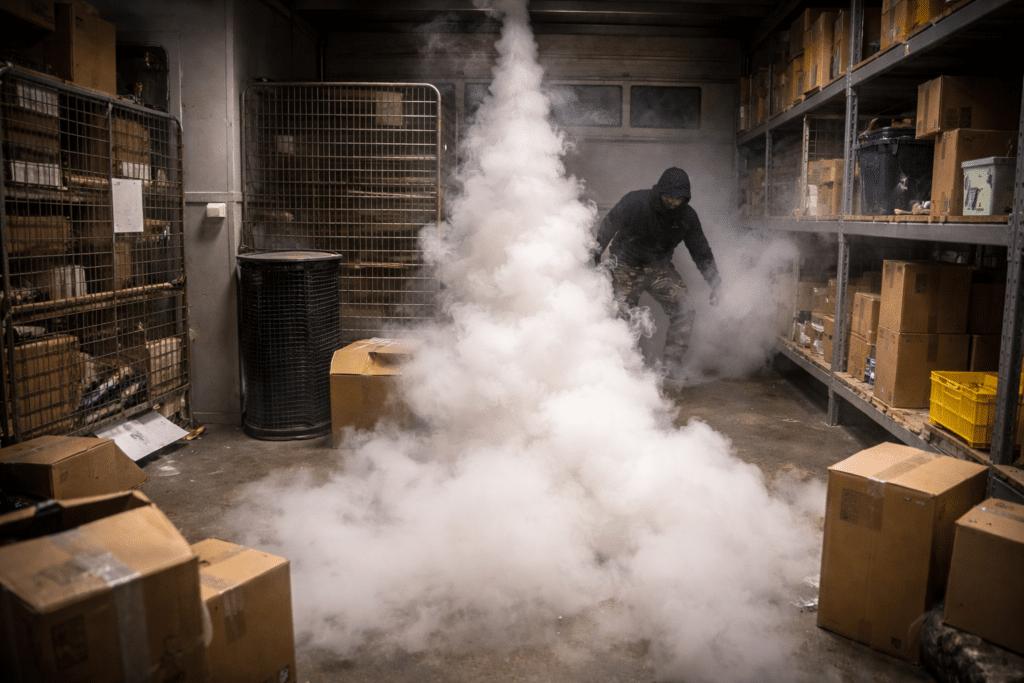
Smoke cloak Australia refers to security fogging systems used in Australian homes and businesses that rapidly release dense, non-toxic fog during a break-in. The fog reduces visibility to near zero within seconds, forcing intruders to leave while protecting people, property, and assets without physical confrontation.
3) Why Smoke Cloak Systems Matter in Australia
Australian businesses face a unique mix of challenges:
- Geographic spread: Many commercial sites are unattended overnight.
- Retail theft and burglary: Particularly in urban and suburban areas.
- Staff safety obligations: Employers must reduce risk, not escalate it.
Traditional security systems—alarms, cameras, and monitoring—are essential but reactive. They alert someone after a breach begins. Smoke cloak systems add a proactive layer by physically stopping the crime in progress.
According to crime prevention guidance from Australian policing bodies, measures that increase effort and risk for offenders are among the most effective deterrents (NSW Police Force – Crime Prevention). Smoke cloak technology aligns with this principle by immediately denying visibility.
4) How Smoke Cloak Technology Works (Explained Simply)
At its core, a smoke cloak system is straightforward:
- Detection:
The system integrates with existing alarms, motion sensors, or access control. - Activation:
When a confirmed intrusion occurs, the unit triggers automatically or via monitoring. - Fog Deployment:
Within seconds, a dense fog fills the protected area, reducing visibility to around 30–50 cm. - Intruder Exit:
Disoriented and unable to see, most intruders leave immediately.
Importantly, the fog used in reputable systems is:
- Non-toxic
- Non-irritant
- Designed not to leave residue
Fire and safety authorities in Australia emphasise that any security technology must not introduce new hazards. Modern fogging fluids are engineered to meet this expectation (Fire and Rescue NSW).
5) Smoke Cloak Australia vs Traditional Security Measures
The most effective security strategies layer multiple controls. Below is a simplified comparison to show where smoke cloak systems fit.
| Security Measure | Primary Purpose | Limitation |
|---|---|---|
| Alarm system | Alerts breach | Does not stop offender |
| CCTV | Evidence & deterrence | Crime still occurs |
| Security guards | Physical response | Costly, delayed |
| Smoke cloak system | Immediate crime interruption | Requires correct setup |
Key insight: Smoke cloak systems are not replacements—they are force multipliers when combined with alarms and monitoring.
6) Where Smoke Cloak Systems Are Used in Australia
From my experience, smoke cloak Australia solutions are most commonly deployed in:
- Retail stores (jewellery, electronics, fashion)
- Warehouses and logistics facilities
- Pharmacies and medical suppliers
- Automotive and trade supply businesses
- Offices with sensitive data or equipment
They are particularly valuable where high-value items are easily accessible and removal time is critical.
7) Compliance, Standards, and Safety Considerations (Australia)
While smoke cloak systems are legal to use in Australia, businesses should treat compliance as an administrative and safety process, not legal advice.
Key considerations include:
- Electrical compliance: Installation should follow Australian electrical standards managed through recognised frameworks such as Standards Australia (Standards Australia).
- Fire safety coordination: Fog systems should be configured to avoid unwanted interaction with fire detection where possible.
- Occupational safety: Clear staff training ensures no confusion during testing or real activations.
Most reputable installers will manage these checks as part of system design and commissioning.
8) Installation Process: What to Expect
Installing a smoke cloak system is usually faster and less disruptive than many expect.
Typical Onboarding Checklist
- Site assessment and risk review
- System sizing based on room volume
- Integration with existing alarms
- Staff briefing and activation training
- Test activation and handover
For Australian businesses seeking integrated solutions, working with a local provider that understands site layouts, response times, and monitoring expectations can simplify deployment. A practical example of integrated commercial security planning can be explored through this Australian smoke cloak and fog security solution overview from Eclipse Security:
👉 Advanced fog-based security systems designed for Australian businesses
9) Costs, Maintenance, and Operational Reality
Typical Cost Factors
- Size and number of protected areas
- Integration complexity
- Monitoring requirements
While exact pricing varies, businesses should consider total cost of ownership, not just upfront cost.
Maintenance Reality
- Annual servicing is common
- Fog canisters are replaced after activation
- Systems are generally low-maintenance
From operational experience, maintenance costs are modest compared to potential losses from a single successful break-in.
10) Benefits and Limitations: A Balanced View
Key Benefits
- Immediate interruption of theft
- Non-violent and staff-safe
- Strong psychological deterrent
Practical Limitations
- Requires correct configuration
- Not suitable for all environments (e.g. open outdoor areas)
- Must be part of a layered security approach
Balanced evaluation helps ensure expectations align with reality.
11) People Also Ask: Smoke Cloak Australia
Is smoke cloak legal in Australia?
Yes. Smoke cloak systems are legal when installed and operated correctly, following safety and electrical standards.
Is the fog harmful to people or equipment?
Modern security fog is non-toxic and designed not to damage electronics when used as specified.
Can smoke cloak systems work with existing alarms?
In most cases, yes. They are commonly integrated with alarms and monitoring services.
Will smoke cloak trigger fire alarms?
Properly designed systems minimise this risk, but coordination during installation is essential.
12) Frequently Asked Questions (Expert Q&A)
How fast does a smoke cloak system activate?
Typically within seconds of alarm confirmation, depending on system design.
Can staff accidentally trigger the system?
With proper training and access controls, accidental activations are rare.
Is smoke cloak suitable for small businesses?
Yes, especially where high-value items are present and response time matters.
Does fog leave residue behind?
Reputable systems use dry fog that dissipates without residue.
How long does the fog last after activation?
Visibility usually returns within 20–60 minutes, depending on ventilation.
13) Conclusion and Next Steps
Smoke cloak Australia solutions are best understood as active crime-interruption tools, not marketing gimmicks. When integrated correctly, they reduce loss, protect staff, and add a powerful layer to traditional security systems.
If you are assessing whether smoke cloak technology suits your Australian business, start by reviewing your risk profile, site layout, and existing controls. From there, seek practical guidance from providers experienced in local conditions and standards.
For businesses ready to explore fog-based security as part of a layered protection strategy, learn more about professionally designed systems and implementation pathways through Eclipse Security’s Australian smoke cloak solutions—and take the next step toward proactive, evidence-based protection.